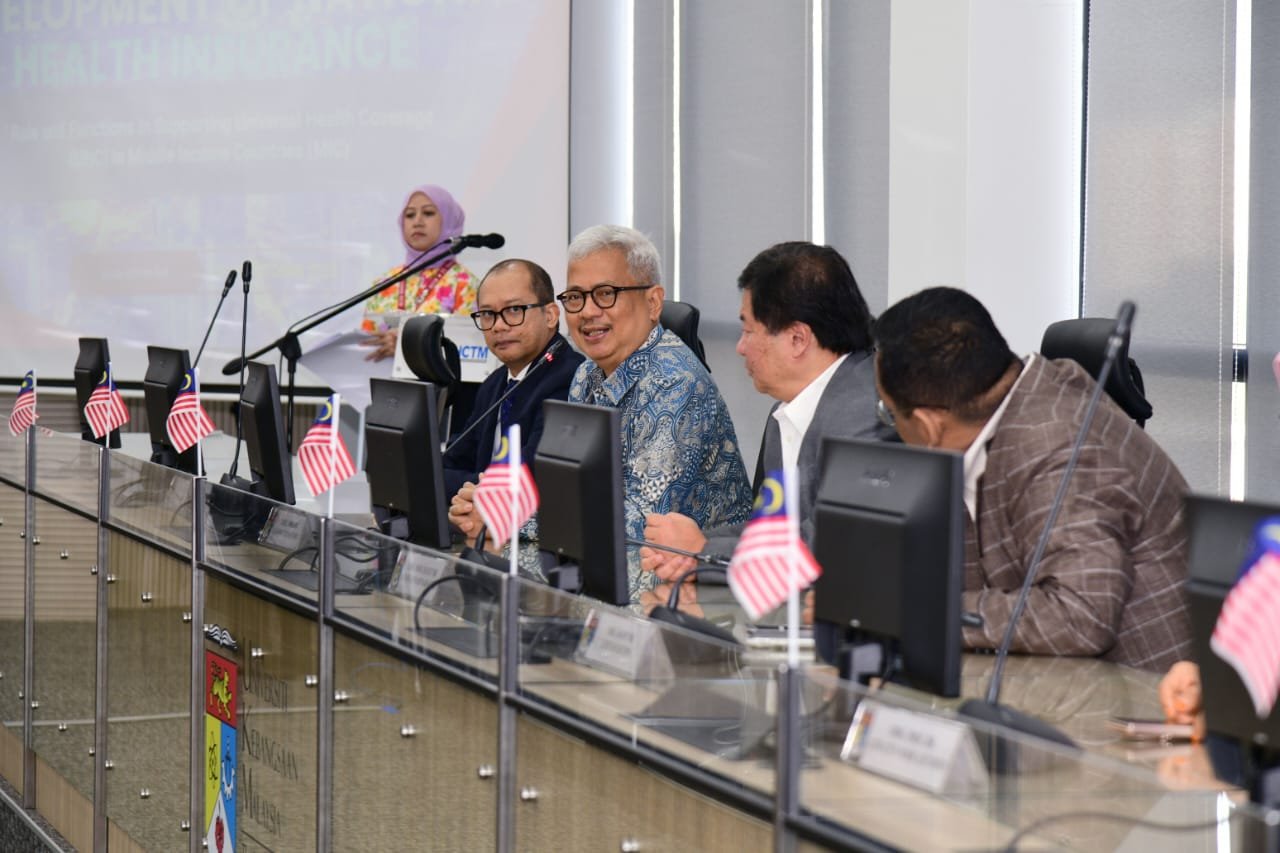
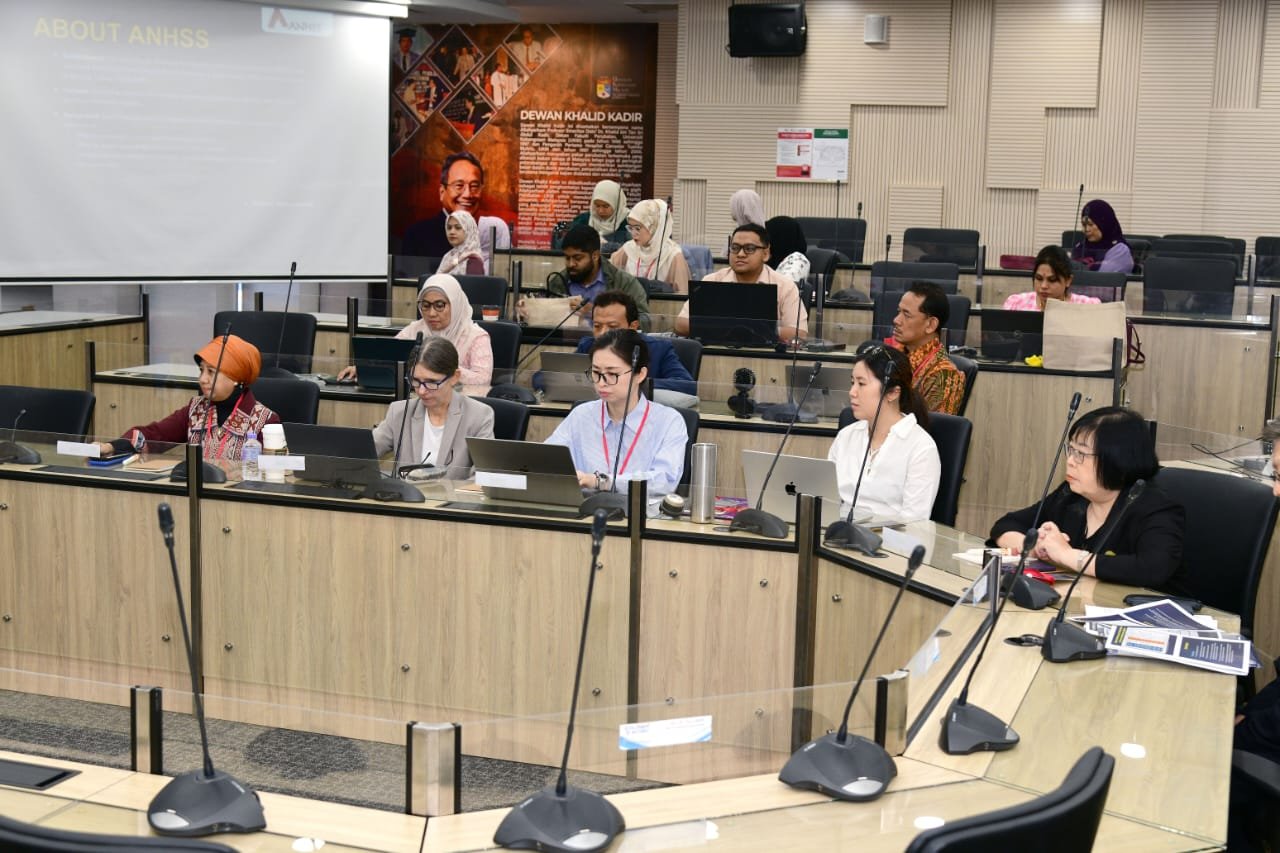
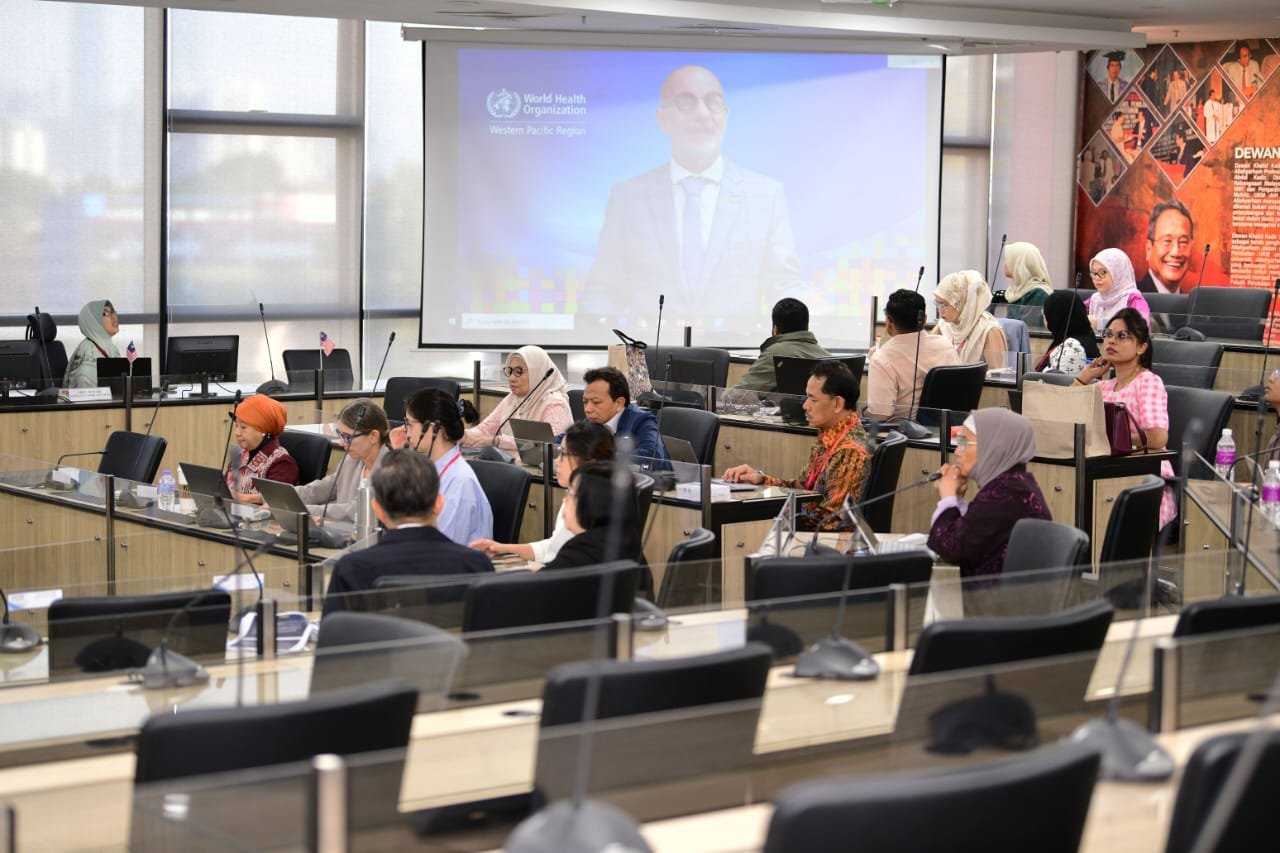
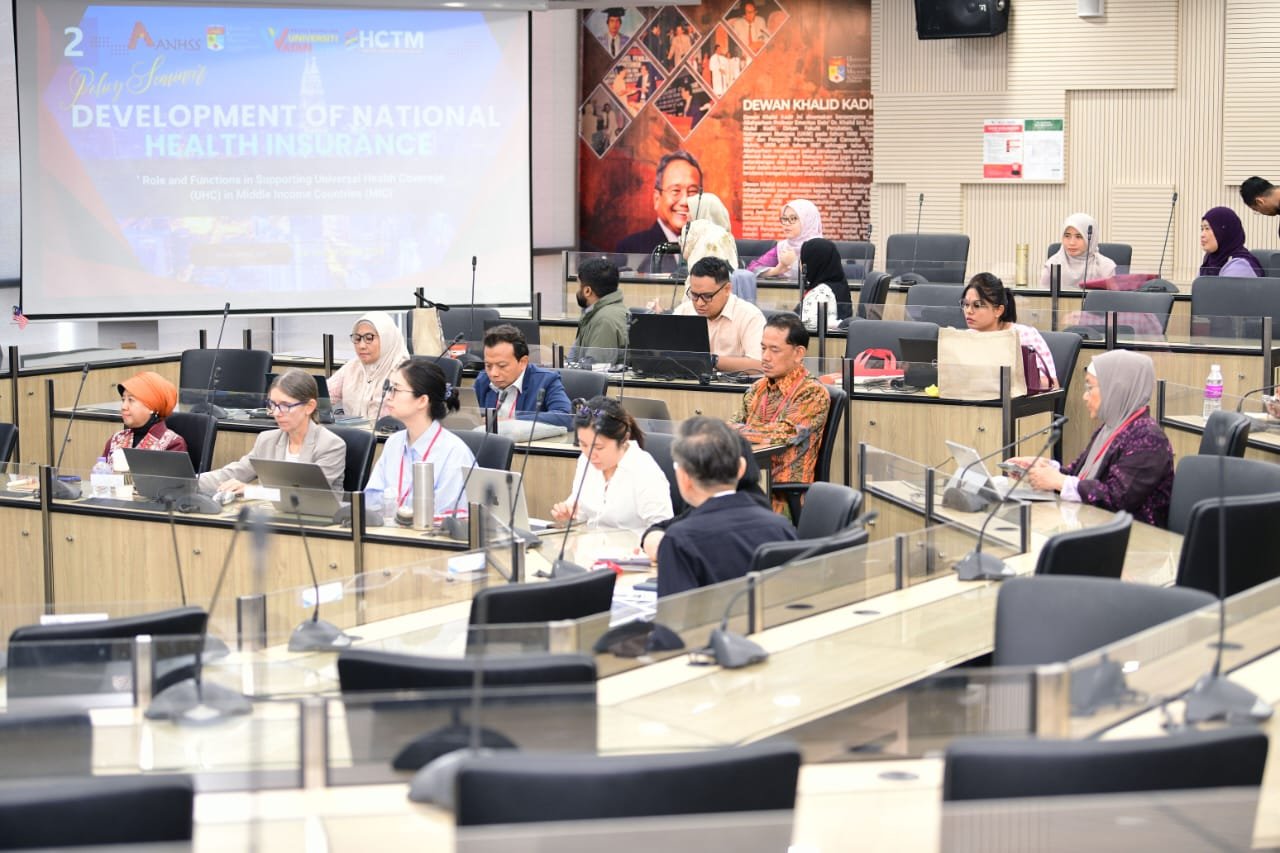
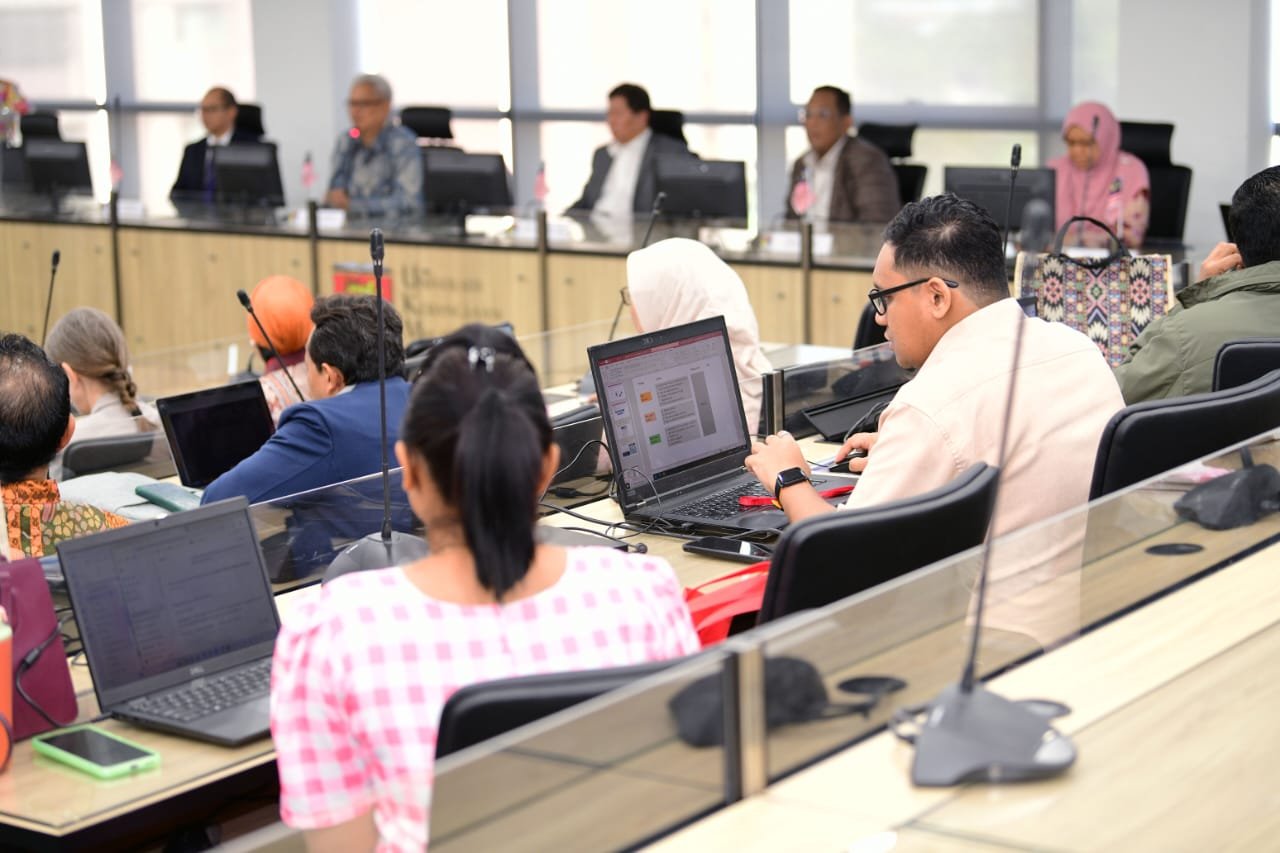
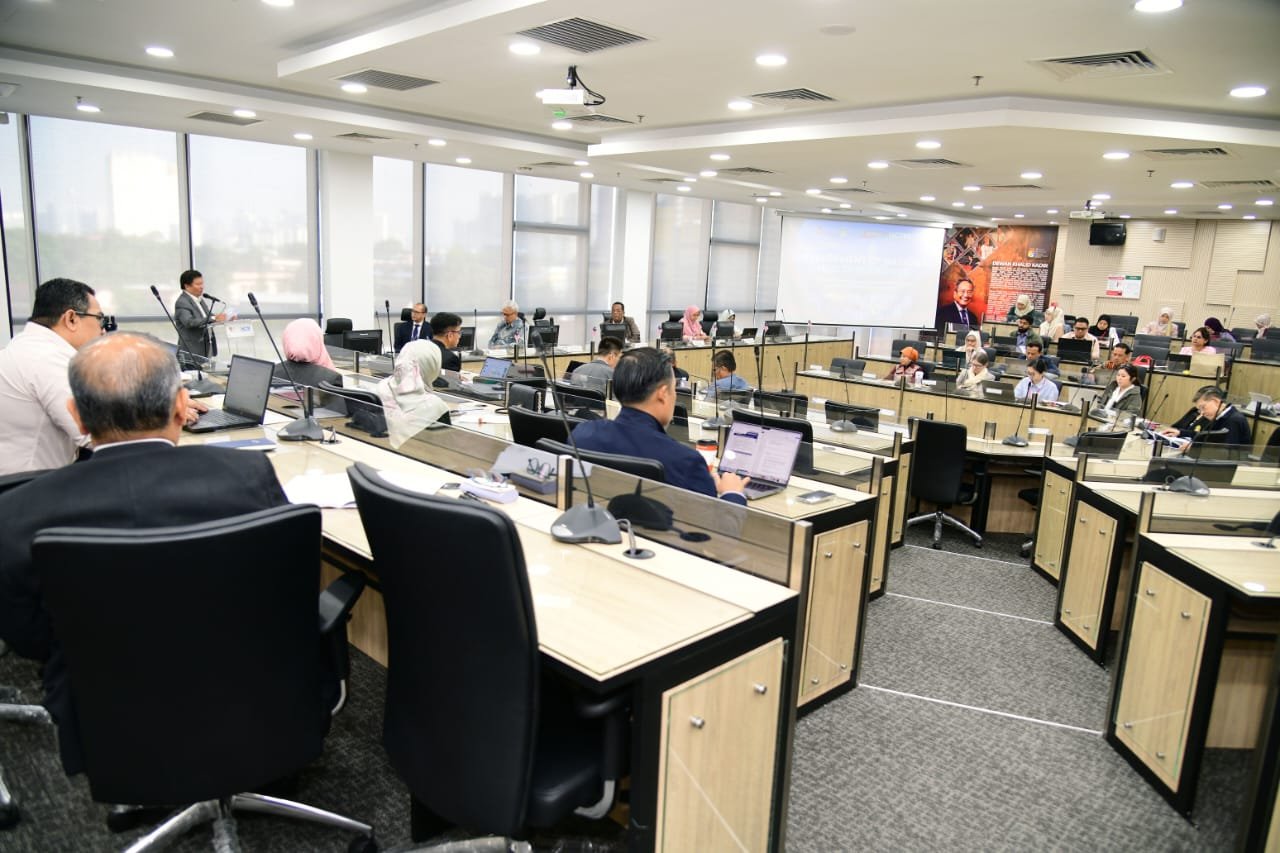
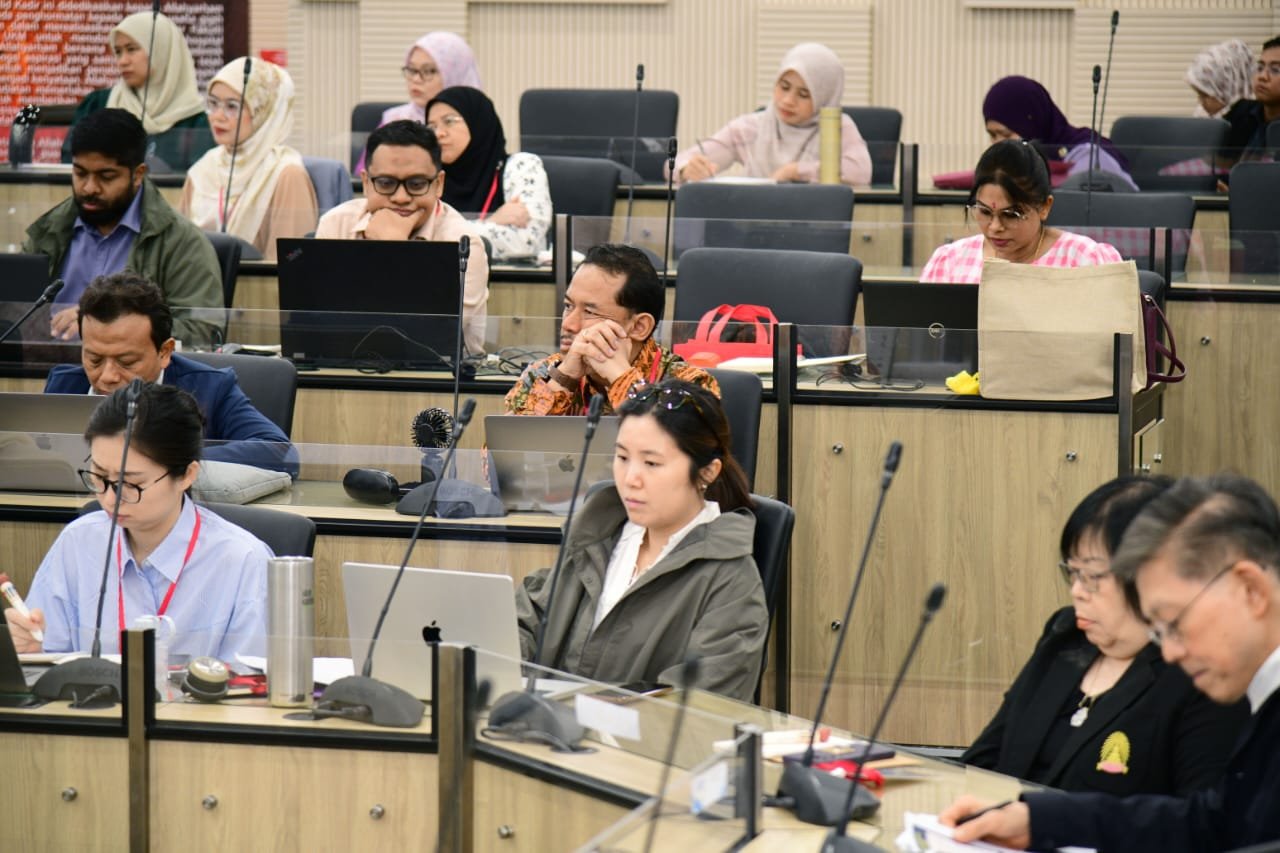
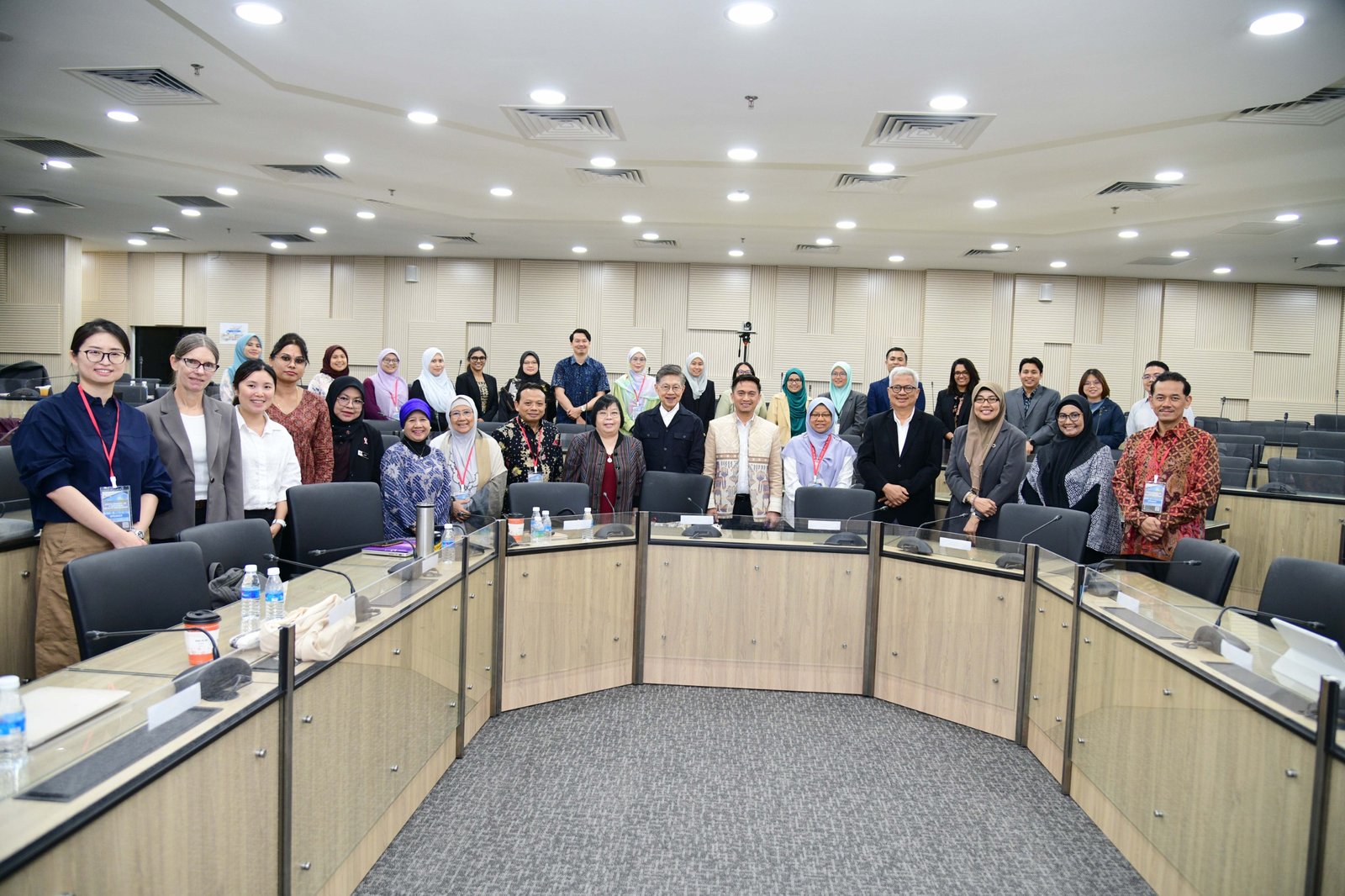
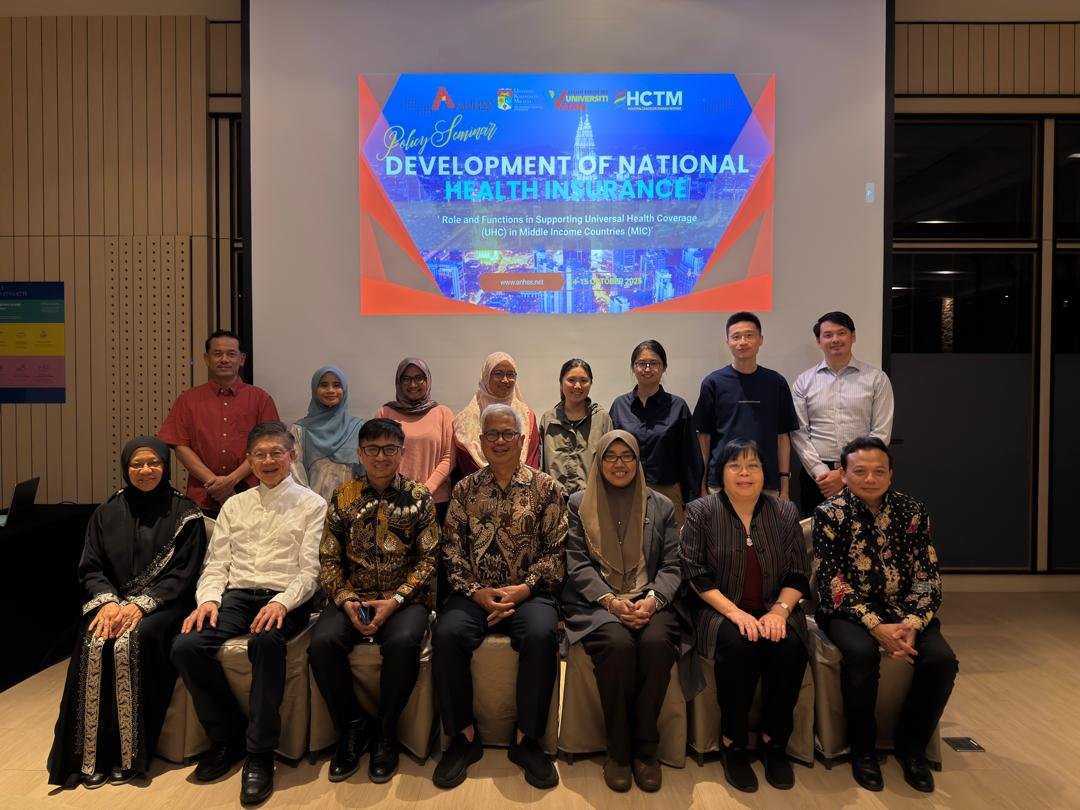
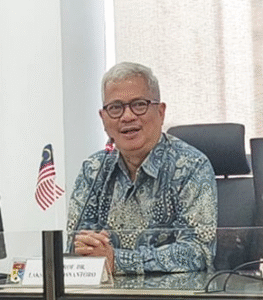
 The seminar, titled “Development of National Health Insurance (NHI): Roles and Functions in Supporting Universal Health Coverage (UHC) in Middle-Income Countries (MIC),” focused specifically on the context of Malaysia and comparisons with the experiences of Indonesia, Thailand, Hong Kong, and other countries. The seminar opened with remarks from Prof. Dr. Laksono Trisnantoro (Chair of ANHSS and Professor at Gadjah Mada University, Indonesia) and Prof. Dr. Hanafiah Haruna Rashid (Vice Chancellor of Universiti Kebangsaan Malaysia).
Prof. Laksono introduced the Asia-Pacific Network of Health Systems Strengthening (ANHSS), a network formed in 2009 to share information and build capacity in health policy in the Asia-Pacific region. The seminar focused on changes to national insurance systems to develop Universal Health Coverage (UHC) in middle-income countries, with particular attention to Malaysia, which has a strong system but faces financial challenges. The main objectives of the seminar were to explore policy options for combining public and private health financing, identify challenges and issues in
tax- and social-based health systems, analyze the interaction of user fees, private insurance, social
insurance, and benefit packages, introduce advances in national insurance security, transfers, and audits, including fraud mitigation, and formulate strategies for implementing and evaluating the integration of social and private insurance. Prof. Laksono expressed his gratitude to UKM as the host and hoped that this seminar would generate productive discussions and learning that would strengthen the health system and advance UHC in the Asia-Pacific region.
 Mr. Lluis Vinyals Torres , Director of Health Systems and Services at WHO, highlighted several key points regarding the implementation of national health insurance (NHI):
1) Focus on Function, Not Institutions, meaning it is important to discuss the functions to be achieved in the health system (i.e., progress toward universal health coverage) rather than simply establishing new NHI institutions. Payment mechanisms can be improved without the need for new institutions.
2) Malaysia has demonstrated excellent performance in health service delivery and financial protection compared to other countries in the Western Pacific region, giving it a strong starting point.
3) Lessons from NHI Implementing Countries:
- Funding is generally a combination of premium contributions and tax subsidies.
- Population coverage begins with formal workers, expands to informal workers, and then to the poor through subsidies, with the challenge of keeping informal sector membership active.
- It is difficult to control hospital costs and develop explicit benefit packages.
- In terms of governance, there is a struggle between the Ministry of Health and NHI
institutions regarding their respective roles.
4) There is no perfect payment mechanism for services, and dynamic adaptation is needed every 3-4 years to adjust incentives.
5) Reflections for Malaysia
- Reconsider the establishment of a separate revenue collection instituti
- Avoid fragmented fund pooling; integrated pooling is preferable.
- Payment mechanisms must be aligned with policy objectives and continue to adapt.
- Use health finance reform as an opportunity to develop service delivery models
(e.g., integrating hospitals and primary care).
 Prof. Dr. Hanafiah Haruna Rashid, as Vice Chancellor of the Kuala Lumpur Campus of
Universiti Kebangsaan Malaysia, conveyed the following important points:
1) He greeted and welcomed the guests and seminar participants. He humbly acknowledged that as a vascular surgeon, his knowledge outside this field was limited, but emphasized that this seminar focused on financial issues in health.
2) Challenges of the Malaysian Healthcare System
- He commended Malaysia’s tax-funded healthcare system (similar to the UK system) for its good performance, but stated that the sustainability of this system faces significant challenges.
- Despite a 8% increase in government funding, this amount is still far from ideal for maintaining universal free healthcare coverage amid rising costs.
- The increase in costs is due to an aging population, an increase in non- communicable diseases (NCDs), rapid technological advances (e.g., robotics, new drugs), and aging hospital infrastructure and PFI (Private Finance Initiative) costs.
- Over 60% of the operational budget is allocated to salaries, limiting funds for patient care.
- It is emphasized that there is a public-private dichotomy, where 70% of patients are served in the public sector, but 70% of specialists are in the private sector, causing an imbalance in workload and an exodus of human resources from the public to the private sector in search of better salaries and working environments.
- It is mentioned that there is a Health White Paper document covering 15 points in addition to financing that needs to be resolve
3) Direction of Health Financing
- An effective payment system is crucial and needs to be adjusted every few years according to the different needs of the country.
- Supporting the introduction of the casemix and DRG (Diagnosis-Related Groups) systems, which were recently budgeted as a good starting point, and commending the role of SMEs in health informatics.
- The national health financing model must be fair to recipients, payers, and providers.
- Highlighting three critical challenges: maintaining current service quality, securing sufficient investment for modernization, and ensuring adequate funding capacity for future development.
4) Political Will and the Role of Academics
- Transforming a nearly free healthcare system into a fee-based system requires strong political will, as such changes will have cost implications.
- Encouraging close collaboration between academics and policymakers. Academics must provide advice based on sound knowledge, while policymakers consider risks and public acceptance.
In closing, the Vice Chancellor of UKM thanked the organizing committee and officially opened the seminar, hoping that there would be productive discussions.
 Prof. Dr. Sharifa Ezat Wan Puteh (Dean of the Faculty of General Sciences and Professor of
Hospital and Health Management, Faculty of Medicine, UKM)
Prof. Dr. Sharifa Ezat Wan Puteh highlighted the following key points:
1) Malaysia’s dual-tier health system aims for UHC. The public sector is funded by taxes, offering minimal or free services (there is a proposal to increase fees from RM1 to RM10-50). The private sector is growing rapidly, offering higher standards, shorter queues, and more advanced technology for those who can pay out of pocket or have private insurance.
2) Issues and Needs for Reform
- Increased out-of-pocket (OOP) payments despite the goal of UH
- High burden of NCDs (cardiovascular, diabetes, hypertension), and increased mortality from pneumonia.
- Middle-income groups are in a “desperate” position, unable to afford private health insurance but considered too “wealthy” for public subsidies.
- Relatively low private health insurance coverage (22% of the population).
- Social protection schemes (PeKa B40, Skim Madani) are not 100% comprehensive.
- Waste and fraud exist within the system.
- Concerning modern lifestyles (vaping, smoking).
3) The financing models being considered are social health insurance, voluntary private insurance, or a hybrid. There are concerns that the Malaysian Health Insurance Fund (MHIF), which allows the withdrawal of EPF funds for private insurance, could potentially undermine social health insurance.
 Prof. Eng-kiong YEOH , GBS, OBE, JP – Director, Centre for Health Systems and Policy Research, JC School of Public Health and Primary Care. Faculty of Medicine, The Chinese University of Hong Kong, Hong Kong
Prof. Dr. Eng-kiong YEOH (also known as Prof. E.K), founder of the Asia-Pacific Network of Health System Strengthening (NSSS) and lecturer at the Chinese University of Hong Kong, presented a comprehensive view of national health insurance (NHI) and its challenges, with an emphasis on the Asian context and similarities with Malaysia. He made the following points:
1) The goal of Universal Health Coverage (UHC) is that the health financing system must enable everyone to access necessary, effective, and quality health services without financial hardship (catastrophic expenditure). He emphasized the importance of equity because disadvantaged communities are more vulnerable to health risks and their impacts.
2) Health Financing Components (WHO Framework):
- Revenue sources can come from taxes, social insurance, employment benefits, and individual contributions.
- Pooling, the importance of pooling funds to spread ris
- Strategic Purchasing, which consists of explicit benefit packages (who receives what, what is paid for, co-payment) and the purchase of services from providers.
- The objectives of UHC are the realization of services versus needs, equity, and efficiency.
3) Efficiency in the Health System: he cited global figures that 30% of health expenditures are wasteful (10% due to errors, 60% due to following clinical protocols that may not be efficient). Malaysia, like Hong Kong, has a fragmented system (public hospitals, private primary care) that needs to be addressed.
4) NHI vs. Social Health Insurance, where Prof. EK explained that these terms often overlap.
Characteristics of NHI include universal and mandatory membership, benefits independent of ability to pay, prepayment, and risk pooling. Payer-provider separation often distinguishes NHI from more integrated national health systems (NHS).
5) Challenges in Implementing NHI
- NHI systems often face issues of inefficiency, over-utilization, and high out-of- pocket payments initially (e.g., Taiwan).
- Although user fees are rational for generating revenue and reducing waste, evidence shows that they can be a barrier to access and cause catastrophic expenditures, especially for the poor.
- Increased costs in the public sector can encourage the private sector to raise prices further (medical inflation).
- Malaysia, like Hong Kong, has a fragmented system where primary care is often neglected in favor of hospital care, even though integration is important for chronic diseases.
6) Recommendations for Malaysia
- Consider how NHI will integrate the public and private sectors.
- Address issues of waste (administrative, clinical, duplication of services).
- Ensuring that NHI does not exacerbate financial risks for the poor.
- There needs to be strong political will for change, given the current “free” system.
- Strengthen primary care and facilitate the formation of a network of providers for integrated and quality care.
- The single-payer system (single pool) in NHI needs to set prices strategically to obtain the best services at the lowest cost.
7) Prof. EK interacted with Dr. Ravindra, suggesting that NHI should not raise all prices to private sector levels, but could use different rates. It was emphasized that the transition to NHI is a significant political issue, not just a technical one, especially in the face of resistance from private providers or the need for greater cross-subsidies from high-income taxpayers.
 Prof. Laksono Trisnantoro began by emphasizing the goal of health financing for Universal Health Coverage (UHC), which is to ensure access to quality services and financial protection. He then highlighted common challenges in health financing, including:
1) Increased healthcare costs due to demographic patterns (aging population), chronic diseases, and the development of expensive medical technology.
2) Limited sources of health financing, from taxes and insurance contributions.
Comparison of Health Finance Data (Indonesia, Thailand, Malaysia)
1) Government vs. Private Financing: Malaysia is fairly stable, Thailand is increasingly dominated by the public sector, while Indonesia shows fluctuations.
2) Tax-to-GDP ratio: Indonesia, Malaysia, and Thailand have low tax ratios compared to developed countries (approximately 10%, 13%, and 17%, respectively). This highlights the importance of private financing.
3) Private Insurance: Indonesia is very limited (around 4.6% of total health spending and stagnant for 20 years), Thailand has experienced significant growth (3.2% to 18.1%), and Malaysia has also increased (5.3% to 9.3%).
4) Out-of-Pocket (OOP) payments remain high in Indonesia, have increased in Malaysia, and have decreased dramatically in Thailand following the implementation of UHC.
5) Health Expenditure as a % of GDP All these countries are still low (around 4%) compared to developed countries (US 16%, Japan 8%).
Health Financing Issues and Policies
1) Thailand: Experiencing chronic underfunding, increased demand for outpatient/inpatient care, hospital financial constraints, uneven distribution of infrastructure and human resources, and financial sustainability challenges due to an aging population.
2) Indonesia faces equity issues due to its vast territory and archipelago, difficulties in collecting payments from premium-paying members, and disparities in the utilization of social insurance, which tends to be pro-rich (enjoyed more by the wealthy). The single pool nature means that funds intended for the poor may be used by relatively better-off BPJS members. This is related to access, not because the poor are healthier.
3) Malaysia, The tax-based system is under pressure from limited budgets, threatened service quality, and a “brain drain” of human resources from the public to the private sector.
Challenges of Tax-Based Financing Systems
1) Funding Volatility: Dependent on tax revenue and economic cycles, as well as political decisions.
2) Budget Competition: The health sector must compete with other sectors.
3) Narrow Tax Base: The large informal sector is difficult to tax.
4) Cost Pressure: From demographics and technology.
5) Inefficiencies: Resulting from weak administrative capacity.
Social Insurance System Challenges
1) Incomplete Coverage Particularly the difficulty of collecting contributions from the informal sector.
2) Fragmented Pooling Can weaken solidarity (as in Thailand).
3) Contribution Compliance Issues in premium collection and administration.
4) Cost Pressure From demographic and technological changes.
5) Incentive Issues Potential for overuse and fraud.
Key Messages
1) The goals of UHC (access to quality services and financial protection) must be achieved quickly.
2) Policies must be pro-poor, prioritizing the less fortunate in the allocation of tax resources.
3) There is no single perfect UHC financing model; every system has its challenges.
4) Private insurance is essential to complement social insurance; policies, regulations, and market development for private insurance are needed.
5) Private service systems can attract human resources, so negative impacts on the public system must be controlled.
Prof. Siripen Supakankunti – Director, Center for Health Economics, Faculty of Economics, Chulalongkorn University
Prof. Dr. Siripen Supakankunti from Thailand explains her country’s experience in achieving Universal Health Coverage (UHC) and the challenges of equity in health financing.
1) Thailand’s Financing Model, where Thailand has three main health financing schemes: the UHC Scheme (based on general taxation), the Social Security Scheme (based on contributions for formal workers), and the Medical Allowance Scheme (for government employees). The UHC Scheme is primarily funded by indirect taxes.
2) Regarding Equity vs. Equality, Prof. Siripen emphasized the importance of equity (providing resources based on need) over equality (giving everyone the same) in health financing. UHC financing should allow for contributions based on ability to pay and receipt of benefits based on care needs.
3) Thailand’s achievement of UHC, where Thailand has significantly reduced out-of-pocket (OOP) payments and catastrophic health expenditures, despite a relatively low health budget as a percentage of GDP (~3-4%).
4) Challenges
- The difficulty of collecting contributions from the large informal sector has prompted Thailand to shift to a tax-based scheme for UH
- The provision of free services through UHC increases demand, creating an excessive workload for providers (hospitals).
- Significant wealth inequality in Thailand (the richest 10% control 75% of wealth) indicates that health financing alone cannot fully address this social issue.
- Difficulty in determining “essential” benefit packages because the public tends to want full coverage, which hinders the introduction of contribution schemes.
5) Thailand faces pressure from an aging population and slow economic growth. Strong political will and public understanding are needed for financing system reform.
6) Prof. Siripen suggested developing national analytical capacity for evidence-based policy and strengthening multidisciplinary teams in building health systems.
 Prof. E.K discusses the role of health insurance in the context of Universal Health Coverage (UHC) and the equity issues that influence it, especially when compared to the fee-for-service (FFS) system.
1. The Context of UHC and Characteristics of National Health Insurance (NHI):
- Ensuring access to needed, quality, effective healthcare services without causing financial hardship.
- The health system must address differences in risk exposure, vulnerability, access to services, and financial consequences for disadvantaged populations.
- Characteristics of NHI include mandatory universal enrollment, rights regardless of ability to pay, mandatory prepaid revenue sources (taxes/social security contributions), single risk pooling, single purchaser, separation of purchaser and service provider (purchaser-provider separation), and involvement of public and private service providers.
2. Issues and Challenges in Health Financing
1) It is important to analyze health service gaps, equity of access, fair financial contributions, resource allocation, and financial protection.
2) Out-of-Pocket (OOP) Payments
-
- Occur in every system (user fees, uncovered items, co-payments, deductibles).
- Rationality (Pros) Source of revenue, addresses moral hazard, signals efficient use, financial sustainability.
- Disadvantages (Cons) No risk pooling, hinders necessary care, burdens low-income groups, causes poverty, price inflation, information asymmetry, provider incentives (FFS).
3. Efficiency in the Health System
1) Optimal use of inputs to achieve the best health outcomes.
2) The WHO estimates that 20-40% of global health resources are wasted.
3) Sources of waste include system complexity, unnecessary use of services, duplication of services/investigations, low-value care, operational inefficiencies, fragmented care, and lack of coordination. An example is polypharmacy, which illustrates how specialization and system problems (e.g., patients seeing different doctors, short consultation times) lead to inefficiencies and medical errors.
4. Fragmentation of Healthcare Services (Hong Kong Case Study)
- The Hong Kong system (similar to Malaysia and Singapore) has publicly funded specialist and hospital care, while primary care is mostly private and privately funded.
- Consequences: Service segmentation, difficulty accessing care, especially for chronic diseases requiring multidisciplinary teams and integrated care.
- Integration: It is important to shift resources to more effective and cost-efficient primary care.
5. Strategic Purchasing and Governance
- Strategic Purchasing, important for effective resource allocation. Includes what to purchase (fair benefit packages, integrated services) and from whom (considering quality and efficiency).
- Separation of Buyer-Provider: Enables better cost control, but requires the public sector to be prepared to compete.
- Governance, shared accountability, and political considerations are crucial in managing a system with multiple stakeholders.
Prof. EK also highlighted the importance of considering the capacity of the public and private sectors, as well as how to effectively involve the private sector in achieving UHC.
 Dr. Diah Ayu Puspandari – Chair of the Center for Health Financing Policy and Health Insurance Management, Faculty of Medicine, Public Health, and Nursing, Gadjah Mada University
Dr. Diah Ayu Puspandari provided a comprehensive explanation of the challenges and issues in maintaining social health insurance coverage in Indonesia, particularly the National Health Insurance (JKN) managed by BPJS Kesehatan.
Summary of the points she presented:
1) Background & Implementation of JKN
- JKN was launched in 2014, consolidating previous schemes (ASKES, military, workers).
- The process took approximately 10 years to mature in terms of regulations and infrastructure.
- JKN coverage now reaches 3% of the population.
2) Issues of Coverage Sustainability:
- Inactive Members: Approximately 42% of total JKN members are inactive, with the largest portion (26%) coming from the non-mandatory segment (informal workers, entrepreneurs, PBPU). This reduces the system’s ability to function optimally.
- The claim ratio continues to increase (reaching 39% in January 2025), indicating that expenditures are higher than revenues. This has become a political issue because premium increases are unpopular.
- Cost drivers include shifts in disease patterns toward non-communicable diseases (NCDs), an aging population, advances in medical technology, and a lack of effective gatekeeping in primary care.
- Low public health literacy (<40%) and challenges in accessing healthcare facilities in an archipelagic count
- A highly comprehensive benefits package (“A to Z”) poses challenges in management and adjustment.
- Examples of fictitious claims (phantom clinics) causing significant financial losses (e.g., psychotherapy claims without medical reports).
3) Strategies to Address Challenges
- Improving Premium Payment Compliance
- Auto-debit, e-wallet, micro-payments, cooperative partnerships, installment plans (rehabilitation).
- Utilization of Zakat (BASNAS), CSR, and collaboration with the informal sector ecosystem (ride-sharing applications).
- Reminders, social norms, grace periods, small non-cash incentives (e.g., free access to fitness facilities).
- Improving Efficiency
- Removing duplicate data or deceased members (saving Rp 242.6 million).
- Identifying fraudulent claims (saving Rp 35 million from one case).
- Developing standard protocols for care.
- Formation of a Quality Assurance and Cost Control team.
- Optimizing Contribution Policies. Targeting appropriate subsidies and considering alternative funding sources (tobacco tax, sugar tax).
- Promoting private insurance as a complement to complementary products and shifting out-of-pocket payments for curative care.
- Addressing Geographic Access through Telemedicine or mobile facilities for remote areas.
- Building Trust through testimonials and real-life stories from the communit
4) Key Message: There is no perfect UHC model. Health financing must be “pro-poor” (prioritizing public funds for the poor, encouraging the affluent to use private financing). It is important to strengthen this social product for the long-term benefit of society.
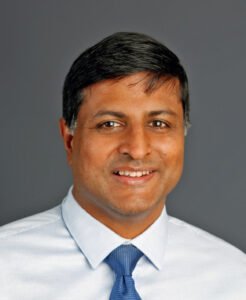 Dr. Ravindra P. Rannan-Eliya, Director of the Institute for Health Policy, Sri Lanka.
Dr. Ravindra P. Rannan-Eliya, Fellow and Executive Director of the Institute for Health Policy (IHP), is a physician and economist with a background in political science and health economics from the University of Cambridge and Harvard. Dr. Ravindra shared his insightful views on the challenges of transitioning to National Health Insurance (NHI) in Malaysia. Dr. Ravindra spoke from Delhi and has been involved with the Malaysian Ministry of Health for nearly three decades, including in the establishment of Malaysia Health Accounts, the Health Commission study, and the Health System Transformation project.
The key points he raised were
1) Repeated attempts to implement NHI in Malaysia since the 1970s have always failed due to political-economic reasons, not technical ones. Understanding why this happened is crucial.
2) Malaysia’s “Atypical” Health System
- Good Performance at Low Cost, where Malaysia has a health system that performs well in terms of basic health outcomes (e., mortality rates, life expectancy) with relatively low levels of health expenditure per capita and as a percentage of GDP compared to similar or even developed countries.
- Universal Health Coverage (UHC) Has Been Achieved, where UHC in Malaysia is achieved through a combination of a tax-funded public system that is free at the point of use (accessible to all Malaysian citizens) and a private sector funded by wealthy citizens who voluntarily choose private services. This alleviates the cost burden on taxpayers.
- Studies show that financial risk protection in Malaysia (measuring catastrophic health expenditures) is better than 95% of other middle-income countries, and even better than the average for high-income countries, including Japan and Taiwan, which have NHI.
- Although the proportion of OOP in total financing is high, this is due to low public spendi OOP is dominated by wealthy citizens who choose private services, rather than being spread evenly and causing hardship for the poor.
- Unlike many developing countries, the use of public sector services in Malaysia is pro-poor, while the private sector is pro-ric Overall, the use of health services is equitable.
3) Motivation for Reform (Not Increased Financial Protection)
- The main motivation for NHI in Malaysia is political, to address the dissatisfaction of the middle class (M40) who feel that private services are expensive but are considered too wealthy to rely entirely on the public sector. It is not to increase financial risk protection, as Malaysia already performs well in this rega
4) Distributive Implications of NHI Simulation in Malaysia
- The new NHI will pay private providers at current private market rates (or higher) and will be funded by progressive taxes/premiums.
- 80% of Malaysians will be better off (receiving more NHI benefits than they pay in additional taxes/premiums). However, the richest 20% (top income decile) will be worse off because they will have to pay significantly higher taxes/premiums to fund NHI for the other 80%, including providing access to expensive private services for everyone.
- This creates a significant political barrier, as the wealthiest group (which is financially most affected) will oppose the change.
5) NHI is More Challenging for Malaysia than Other Countries
- Countries such as Japan, Korea, and Taiwan successfully implemented NHI because they started with strong social insurance systems for the formal sector and their public hospitals were not free (charging user fees even to the poor). Their NHI then expanded coverage to the poor who had previously pai
- Malaysia, on the other hand, already provides good free public services to the poor.
NHI in Malaysia would mean providing access to expensive private services to everyone, including the poor if they choose it, which would require a much larger and more costly increase in public funding.
6) The transition to NHI in Malaysia is an economic-political issue rather than a technical one. It requires strong political will to significantly raise taxes/premiums and convince wealthy groups to pay more for the benefit of the majority of the population, most of whom already receive adequate services for free.
General Discussion Session (After Prof. EK’s presentation)
1) Question (Questioner_1 to Prof. EK): Given that Prof. EK mentioned that 30% of every dollar spent is wasted, how can this waste be minimized? Does this also occur in health insurance?
o Answer (Prof. EK): Waste in healthcare services is indeed complex. Regarding health insurance, there are issues in determining benefit packages and payment mechanisms. Often there is no control over service costs by doctors, and in Malaysia, although private doctor services are regulated, private hospital services are not, making it difficult to control costs. The transition to national health insurance (NHI) needs to address these efficiency issues so as not to create new problems.
2) Question (Participant to Prof. Laksono Trisnantoro): Are there any studies or data on the use of zakat in Indonesia and Malaysia for health financing, and how large is the proportion?
Answer (Prof. Laksono Trisnantoro): Funding sources such as zakat are included in philanthropy. In Indonesia, Muslim hospitals are increasingly developing using Wakaf (land/capital resources) and Sadaqah/Zakat (operational costs). The potential for zakat in Indonesia is enormous (around 500 trillion Rupiah), but only a small portion is being utilized, and not only for healthcare. In Malaysia, there are Wakaf companies that are also starting to grow, but it still needs to be ensured that their use does not cause injustice, especially if only certain groups benefit or pay less.
3) Question (Participant to Prof. Dr. Sharifah Ezat): What are Malaysia’s main policies? Will Malaysia have social health insurance or not?
Answer (Prof. Dr. Sharifah E): There are many discussions. Initially, there was an initiative such as MHIT (Malaysia Health Insurance Fund) for low-income populations. Although it has not been fully promoted, there is a possibility that it will lead to social insurance as part of NHI. Currently, casemix and DRG are being implemented for this purpose, and benefit packages are still under development.
Additional (Prof. Dr. Sharifah): Prof. Sharifah also expressed her concern about the MHIT initiative, which allows the withdrawal of EPF (Employee Provident Fund) funds to purchase private health insurance. She is concerned that this will hinder the development of social health insurance because it could reduce the potential funds that could be used for subsidies in the future. She personally disagrees with the use of EPF funds for this purpose.
4) Question (Participant to Prof. Dr. Sharifah): Are there any mechanisms in place to set rates for the two types of healthcare providers (public and private) in Malaysia? How do these two types of providers set their rates, especially for the same services?
Answer (Prof. Dr. Sharifah): (Prof. Dr. Sharifah directed this question to Dr. Ravi Rannan Eliya to answer)
Discussion Session (After Dr. Ravi Rannan Eliya’s presentation)
Question (Prof. Laksono Trisnantoro to Dr. Ravi Rannan Eliya): In the context of Malaysia, are you suggesting that Malaysia should not change its funding system?
Answer (Dr. Ravi Rannan Eliya): That is not what I meant. What I said was that the Malaysian system (like Hong Kong, Australia, Ireland, Cyprus) has a chronic political problem, namely the dissatisfaction of the upper middle class with the cost of private care. This is the motivation for reform. However, the transition to NHI in Malaysia will require a significant increase in public funding, as it must provide equal access to more expensive private services to everyone, including the poor. This will cause the richest 20% of the population to pay much more, which poses a major political obstacle. Global experience shows that similar transition efforts often fail for economic and political reasons.
Question (Prof. Laksono Trisnantoro to Dr. Ravi Rannan Eliya): But if Malaysia does not change its structure, the phenomenon of a two-tier system, in which the private sector becomes increasingly attractive and many human resources switch from the public to the private sector, will continue.
Answer (Dr. Ravi Rannan Eliya): True, this two-tier system does cause dissatisfaction among the middle class. However, the Malaysian system also has positive features: its public services are “pro-poor” (serving the poor) and their quality is equal to or even better than the private sector in some cases. The poor receive adequate care for free. Addressing this issue through NHI would mean forcing the rich to pay more to provide equal access to expensive private services for everyone, which is politically very difficult, as demonstrated by the history of failed reforms in countries with similar systems.
Question (Participant to Dr. Ravi Rannan Eliya): What is the mechanism for setting rates between public and private healthcare providers in Malaysia, especially for the same services?
Answer (Dr. Ravi Rannan Eliya): In Malaysia, public sector services are essentially free (with minimal user fees). The private sector sets prices based on the market, which are often two to four times higher than the production costs in the public sector for the same services. There are some price regulations, but it is mostly a free market. Private insurance is mostly for inpatient care in private hospitals, while private outpatient insurance is almost non-existent.
Question (Prof. Yeung Keong to Dr. Ravi Rannan Eliya): I agree with your interesting assumption about prices, because many of the issues you mentioned are prices set in the private sector, which is certainly a major political issue. But in political economics, isn’t it easier to address this small segment, when the rest is profitable? Because your assumption is that you want to increase all prices practically, effectively, because you are doing private pricing. But if you use different rates, different averages, it would be a very different scenario. You wouldn’t have to increase revenue too much. So that’s a good question.
Answer (Dr. Ravi Rannan Eliya): Global experience over the past 60-70 years shows that when governments introduce public schemes to pay private providers, they must set prices above private market prices, at least in the initial transition phase (perhaps around the 75th percentile of private market prices). Otherwise, private providers will not participate. Although after monopsony control is established (as in Japan or the UK’s NHS), governments can lower prices, the initial transition phase always requires high payments. This is a political consideration, not a technical one.
Question (Prof. EK to Dr. Ravi Rannan Eliya): I agree that public economics is not something that is easy for the government to create. But I have an intention related to the government you mentioned. One of the things you also pointed out is that the main bidder in hospital officials is the public. So the government does not need to come. And they depend on public revenue. So, it comes from national insurance. So, clearly, the other option is to reinstate the law, requiring everyone to be a founder. That is also something you can do. So, if I were the government, I would rather fight with private founders than fight with the population. Because the benefits are for the population. So, why should I reinstate the price and not cause that to be an opinion?
Answer (Dr. Ravi Rannan Eliya): That’s not how it works in practice. If NHI is introduced, all Malaysian citizens will have the right to access private hospital services. This will force a significant increase in funding, because private services are more expensive. Although there may be long-term efficiencies, the initial cost to taxpayers will be enormous. There are no significant global examples in democratic countries that have successfully made this transition without facing strong political resistance to tax and premium increases.
Question (Dr. Shohada (online) to Dr. Ravi Rannan Eliya): Malaysia currently offers better financial protection for the poor than mature NHI systems such as Japan or Korea, because its public services are essentially free. If NHI is introduced with mandatory payments for all, what progressive subsidy design should be provided to ensure that people do not experience greater financial risk?
Answer (Dr. Ravi Rannan Eliya): There are two approaches. One is to emulate the British NHS of 1948, which provided full coverage without payment at the point of service with a large tax increase (1% of GDP at the time). This is very expensive. The NHI approach in Asia (Japan, Korea, Taiwan) maintains a co-payment and premium structure, even though it is subsidized for the poor. This is done for ideological reasons (to prevent abuse of the system) and political reasons (to maintain support from wealthier voters). If even small payments from the poor are eliminated, it could undermine overall political support for NHI. This transition requires significant increases in taxes or premiums, and that is the main political obstacle that has caused NHI efforts in Malaysia to fail for 30 years.
Question (Prof. Dr. Sharifah to Prof. Dr. Siripen): Who determines what is “essential” and what is “additional” in the benefit package?
Answer (Prof. Dr. Siripen): This is not easy. In Thailand, there is a working group under the Prime Minister that is trying to define “essential” and “additional” benefit packages. This work is ongoing, but it is still being debated because the public tends to want full coverage and does not easily accept restrictions. Without a clear essential package, it is difficult to introduce a contribution scheme.
Question (Prof. Dr. Sharifah Ezat to Prof. EK): In the context of a fragmented system like Malaysia’s, is there no golden rule for handling service overload and ensuring access to different healthcare systems?
Answer (Prof. EK): Large systems do have their own advantages and problems. NHI can purchase services from the public and private sectors. The challenge is to determine the role of the private sector and how to integrate primary care and hospitals. The government needs to encourage the formation of service provider networks (as Singapore has done with GPs), provide incentives for integrated care, and ensure quality and efficiency. It is about incentives and coordination across the system.
Question (participant to Prof. EK): When implementing NHI in a country with dual healthcare providers (public and private), and Malaysia has an almost equal proportion, what is the best proportion or mechanism to address workload issues and improve service quality?
Answer (Prof. EK): The problem is similar to Hong Kong’s experience of hospital autonomy in 1991. NHI must purchase services from both sectors (public and private). Autonomy can help, but there needs to be strategic purchasing that ensures the best price for the best service. It is important to prioritize the purchase of quality, integrated primary care services, not just expensive technology. This also requires developing human resource capacity and encouraging qualified family doctors. Integrating providers and payers (such as the Kaiser Permanente model in the US) can also be an incentive to improve population health and reduce costs.
 Associate Professor Shimeng Liu from the School of Public Health at Fudan University in China presented “Differences in the Functions and Roles of China’s Payment Mechanisms: The Chinese Experience.” Key points included:
1. Country Profile & Health Insurance System
-
-
- China faces an aging population (those aged 65+ increased from 9% to 6% between 2011 and 2024).
- Total health expenditures are increasing every year.
- The multi-tier health insurance system covers more than 95% of the population, but there are challenges in terms of sustainability and efficiency.
-
2. Health Insurance Payment Mechanisms
- Retrospective payment systems, such as fee-for-service, are simple but carry the risk of excessive spending (no cost control).
- Prospective payment systems
-
- Capitation encourages primary care and cost control, but carries the risk of adverse selection and substandard care.
- Payment per case (DRG/DIP)
-
-
- DRG (Diagnosis Related Groups) controls costs, improves transparency, and enhances clinical efficiency.
- DIP (Diagnosis Intervention Packet) accommodates clinical complexity, but has the potential for harmful provider behavior (such as upcoding).
-
3. Key Challenges
- There are two main groups of challenges in service payment models (DRG and DIP). To overcome them, it is recommended to build a standardized national data platform, combine the clinical logic advantages of DRG with the data-based precision of DIP, and implement a mixed payment model accompanied by performance assessment.
- Core Challenges with DRG (case-based/grouping):
- Static grouping and reliance on experts make it less responsive to rapid clinical updates.
- High adoption barriers due to the need for data standardization and adequate infrastructure.
- Cost constraints make it difficult to integrate new medical innovations.
- Key Challenges in DIP (data-driven grouping): Prone to abuse (“gaming”), requiring more sophisticated monitoring of provider behavior.\
- Cleaning historical data of various inefficiencies is a major challenge in establishing a valid baseline.
- Difficulty achieving macro-policy objectives, such as promoting tiered care systems.
- Path Forward
-
- Build a standardized national data platform to eliminate duplication and support system integration.
- Combine DRG clinical logic with DIP data-driven precision to produce a superior grouping methodology.
- Implement a mixed-payment model and performance assessment to balance cost control with service quality and innovation.
4. Recommendations for the future include developing a national data platform, integrating
DRG and DIP, a mixed-payment model, and performance assessment.

Professor Maria Elena B. Herrera (Visiting Lecturer at the Asian Institute of Management, Makati City, Metro Manila, Philippines)
Prof. Maria Elena Herrera presented PhilHealth Philippines’ experience in developing benefit packages for long-term and rare diseases. The following points were highlighted:
- Context & Evolution
The national health insurance (NHI) system began in 1995, with PhilHealth (PHIC) now covering 98% of the population. Initially focused on general patient care, it was later expanded to the informal sector. The 2013 NHI Act mandates coverage and government subsidies. - Coverage & Financing
The historical benefit support ratio is 50-66%. Out-of-pocket expenses remain high (44.4%). Funding was strengthened with “sin taxes” (2020) - Benefit Package Development
- Initially, clinic-based maternity packages were successfully introduce
- In 2012, “Z-benefits” were introduced for catastrophic illnesses, based on incidence, scientific evidence, and economic rationality.
- The latest changes focus on high-cost diseases, with significant increases in rates for interventions such as kidney transplants and hemodialysis sessions (from 90 to 156 per year).
- New benefit additions include oral health, non-hospital emergency care, expanded cancer coverage, removal of the 45-day hospital stay limit, post-kidney transplant packages, pediatric optometry, and expanded Z-benefits for rare diseases.
Key Lessons
Effective benefit design requires clear priorities, evidence, and good data management. NHI provides the foundation for information gathering, but UHC is a journey that requires continuous prioritization due to limited resources.
 Prof. Siripen Supakankunti (Director, Center for Health Economics, Faculty of Economics, Chulalongkorn University)
Prof. Siripen from the Center for Health Economics, Mahidol University, Thailand, presented on “Health Benefit Packages for Primary Care; Capitation Payments, Their Role and Development – The Thai Experience.” The following points were presented:
- Context of the Thai Health System
- Thailand’s healthcare system has been dominated by the public sector with strong infrastructure since the 1970s, but private services also exist as a complement, especially in urban areas.
- Thailand achieved universal health coverage (UHC) in 2002 through gradual evolution, with three main schemes currently in place: for civil servants, formal sector workers (Social Security), and the rest of the population (Universal Coverage Scheme/UCS). Population coverage is nearly 100%.
- Coverage and Benefit Packages
- Although there are three main schemes, all of them provide very comprehensive benefit packages, which is an important factor in influencing the role of private health insurance.
- The 2019 Primary Health Care Act establishes a comprehensive benefits package for primary care, covering individual-focused medical and public health services, health promotion, disease prevention, curative and palliative care, and covering all stages of life.
- Funding and Capitation Payments for Primary Health Care
- Thailand uses a capitation payment system for primary health care, whereby providers receive a fixed amount per registered pers
- The aim is to encourage providers to maintain the health of the registered population and manage resources efficiently.
- The impact is to improve access and cost control, but there is also the potential risk of under-serving or unnecessary referrals due to providers’ cost minimization strategies.
- The challenges faced are rising healthcare costs, an aging population, declining capitation rates, and disparities between schemes.
- Future Direction and Recommendations
- Review and adjust capitation rates to align with community health needs and actual costs.
- Introduce mixed payment mechanisms, such as value-based payment or performance-based payment.
- Invest in primary care infrastructure and workforce.
- Strengthen coordination and governance of the system.
- Developing community-based models and leveraging big data and artificial intelligence (AI) for quality improvement.
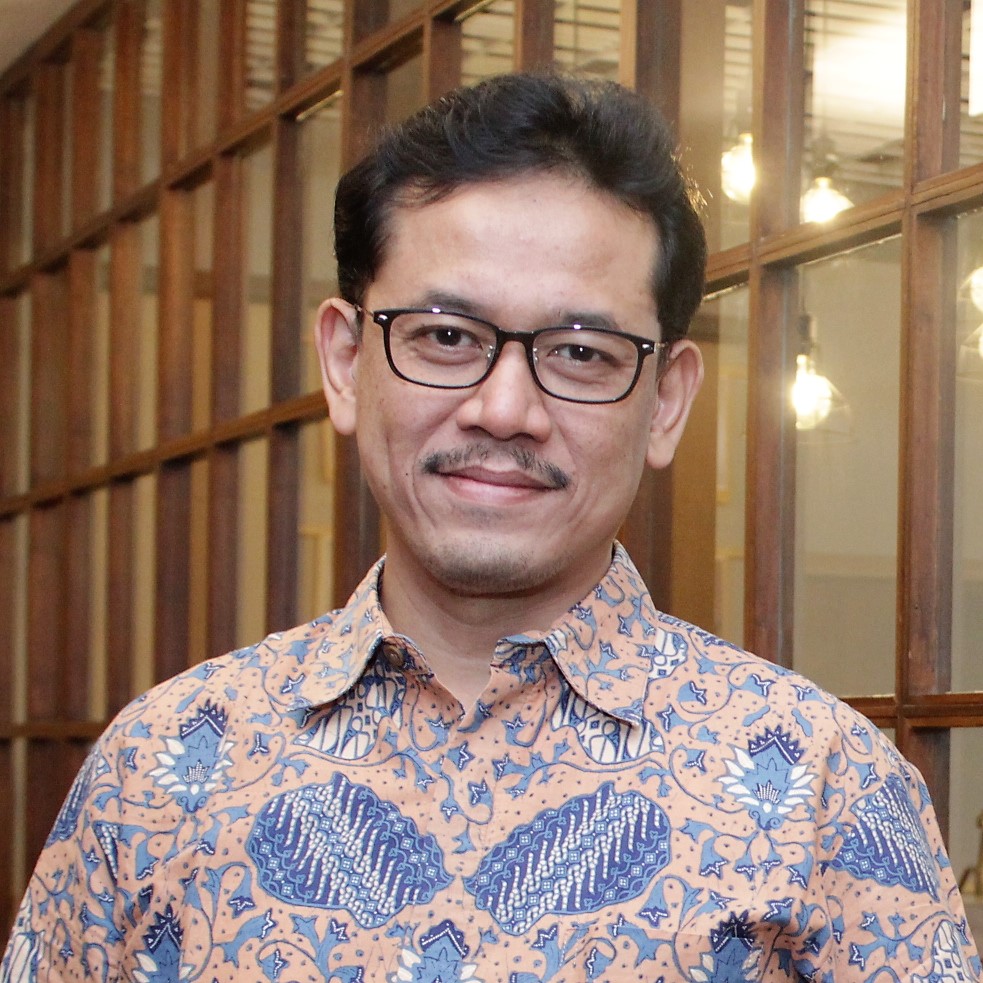 Dr. Hanevi Djasri, MARS. FISQua (Department of Health Policy and Management, Faculty of Medicine, Public Health, and Nursing, Gadjah Mada University, Indonesia)
Dr. Hanevi Djasri presented the quality system policy in Indonesia for the application of value – based principles in social and private health insurance. The points presented included:
- The Concept of Quality vs. Cost
He cited Michael Porter, who emphasized value-based healthcare (high-quality services with the best patient outcomes and most cost-efficient results). - Indonesia’s Quality System Policy
- Health System Regulations
More focused on improving quality (patient outcomes) through quality indicators, patient safety incident reports, and accreditation, but less balanced with cost efficiency. - Health Insurance System Regulations (JKN)
The main focus is on cost efficiency. Standard rates (DRG/capitation) are set based on facility capacity, consumer price index, and regional cost index, not explicitly based on quality. Performance-based payment mechanisms for hospitals have not been developed. The quality and control team (TKMKB) prioritizes cost efficiency.
- Health System Regulations
- Challenges & Recommendations
- The healthcare system requires reform to improve funding efficiency.
- The national insurance system needs to develop financial mechanisms that strengthen quality (e.g., incentives for good quality, financial support for input standards).
- Healthcare facilities are encouraged to take proactive initiatives to reduce costs (e.g., network management, use of IT) and improve patient outcomes (e.g., clinical pathways, measurement of patient outcomes/experiences) without significant cost increases.
Discussion Session – Q&A
1) Question to Professor Maria Elena Herrera
A participant asked how often rates are updated in the Philippines and how support from the private sector is obtained. Prof. Herrera explained that private support comes from extensive consultation and ensuring policies that allow private hospitals to remain profitable, as well as pilot projects with private providers. National insurance rates are negotiated to be lower than private hospital standards, but allow private hospitals to generate revenue by offering higher-cost services (e.g., private rooms). She also mentioned ongoing reviews and audits of service protocols.
2) Questions for Professor Siripen. A participant asked about the roles and relationships between the Ministry of Health and the NHI in Thailand in setting payments ing benefits, and how new technologies are regulated. Prof. Siripen explained that rates and benefits are adjusted through insurance negotiations and health technology assessments (HTAs), including budget impact analyses. Another question concerned the resilience of Thailand’s capitation system to unexpected events (e.g., COVID-19). Prof. Siripen explained that the government intervened with additional funding during the crisis and continued to adjust capitation rates based on public health needs and actual costs, but maintaining quality remained a challenge.
3) Question to Dr. Hanevi Djasri. A participant asked how Indonesia adjusts rates for geographical differences and facility levels. Dr. Djasri explained that DRGs in hospitals have different rates between regions based on regional cost indices. For facilities, rates depend on service competency, not just hospital type. There is also a special capitation for remote areas with low population density.
 Prof. Dr. Azimatun Noor Aizuddin (Head of the International Center for Casemix and Clinical Coding (ITCC), Canselor Tuanku Muhriz Hospital (HCTM) UKM)
Prof. Dr. Azimatun Duraisuddin explained the crucial role of auditing and regulation in mitigating fraud in the national health insurance (NHI) system. The points she raised were:
- The Importance of Auditing
Audit is essential to maintain financial stability, integrity, and public trust in the NHI, as fraud erodes resources and service quality. - Types of Fraud
Involving service providers (e.g., upcoding, phantom billing, unbundling), patients
(identity theft, misuse of information), and administrative staff (false claims, corruption).
- Impact of Fraud
Financially detrimental (high premiums, unsustainable expenditures), damaging public trust, and reducing patient quality and safety.
- Audit Framework & Functions
Supported by external, internal, and government oversight audits. Its main functions are:
-
- a) Prevention (Deterrence), through visible oversight and publication of findings.
- b) Detection using data analysis, field inspections, statistical sampling, and anonymous reporti
- c) Resolution through investigation, restitution, and legal acti
- d) Prevention by strengthening internal controls and reviewing policies.
5. Malaysia’s experience
Has implemented financial and clinical audits, cost reviews, internal controls, and fraud detection methods such as random audits.
- Challenges
Limited resources, data privacy, the evolving complexity of fraud, resistance, and technological adaptation.
- Future Direction
Integrating Artificial Intelligence (AI) for predictive analytics, real-time detection, and interconnected systems to enhance quality and prevent fraud.
Audit is a vital multidimensional tool for protecting the National Health Insurance (NHI), ensuring financial health, integrity, and public health interests.
 Rimawan Pradiptyo, S.E., M.Sc., Ph.D (Head of the Department of Economics, Faculty of Economics and Business, Gadjah Mada University, Indonesia)
Dr. Rimawan Pradityo, together with Ms. Putih, presented on fraud mitigation and consumer protection in insurance, with a focus on the Indonesian experience. The main points presented included:
1. The Context of Crime and Corruption in Indonesia
The existence of a “sense of crisis” and instability in the system, evident from Indonesia’s ambition to achieve Universal Health Coverage (UHC) in 5 years compared to other countries that require decades, causing budget deficits and infrastructure/human resource imbalances.
2. Three Main Problems
- Lack of understanding of the “enemy” (fraud) and onesel
- Complexity due to the dominance of the informal sector (60% of GDP).
- Weak institutional aspects.
3. Comparison with Malaysia
Malaysia has taken more advanced steps in tackling private sector corruption (2018) despite adopting UNCAC later. In Indonesia, the Corruption Eradication Commission (KPK) weakened after 2019.
4. Institutional Quality & Fraud
Indonesia’s Corruption Perceptions Index (CPI) shows a decline. Asymmetric regulation between the public sector (strictly regulated) and the private sector (less regulated) creates a business environment that is vulnerable to fraud.
5. Fraud in the JKN Program (by Ms. Puti)
 a) BPJS Kesehatan is experiencing a deficit due to increased claims and a lack of sustainable contributions from independent participants.
- b) All parties (patients, providers, BPJS, the pharmaceutical industry, the government) have the potential to commit fraud.
- c) Examples of fraud: use of false identities, fictitious bills, upcoding, fictitious providers, double billing, kickbacks, embezzlement.
- d) Causes: low salaries for healthcare workers, information asymmetry (patients lack understanding of procedures), ineffective anti-fraud measures, and unclear regulations regarding escalating sanctions.
6. Recommendations
Indonesia has developed ethics courses, automation/digitalization (e-catalog, BPJS Kesehatan application, electronic medical records), and a JKN fraud prevention and handling team.
- Way Forward
Utilize Artificial Intelligence (AI) for real-time fraud identification and detection, and optimize the Population Registration Number (NIK) as a single data source for synchronization and early fraud detection.
Discussion and Q&A
- Questions for Professor Azimatun Noor Aizuddin. A participant requested further explanation about fraud prevention measures prior to audits. Prof. Azimatun mentioned clinical decision systems in EMR and pharmacy systems that can flag unusual or repetitive claims. Another question concerned the ‘unprofessional behavior’ of healthcare providers and whether this should be integrated into the curriculum. Prof. Azimatun acknowledged the existence of moral hazard, especially in the private sector, and the importance of ethical reminders and strong incentive systems.
- Questions for Dr. Rimawan Pradityo & Ms. Puti. One participant asked about the prevalence of corruption in Indonesia prior to UHC and whether fraud was more common at higher levels of government. Dr. Rimawan explained that previous data on fraud was difficult to obtain due to legal limitations (only the public sector could be prosecuted for corruption). Ms. Puti added that fraud occurs at various levels, driven by low salaries and information asymmetry, and that better payment incentives are needed to reduce fraud. They also acknowledged that people in high positions may expect ‘additional payments’ due to a flawed incentive system.
Malaysia Group Discussion:
- Malaysia Group Discussion – Tax-Based Financing. This group discussed governance challenges in Malaysia’s tax-based financing, proposing governance reforms with the establishment of a National Health Commission for strategic purchasing and payment mechanism reforms. They also discussed private sector integration.
- Malaysia Discussion Group – Private Health Insurance. This group analyzed the private health insurance situation in Malaysia, highlighting the importance of PHI integration to complement public funds and reduce personal expenditures. Proposals included benefit standardization, product innovation, and regulatory reform.
- Malaysia Group Discussion – National Health Insurance. This group supported Malaysia’s shift towards a national health insurance model, emphasizing the importance of a strong governance and policy framework, sustainable resources, equity, inclusiveness, and public-private partnerships.
Closing Discussion: The Situation of Private Health Insurance and its Future Prospects in Supporting Universal Health Insurance.
Facilitator: Prof. Laksono Trisnantoro

Assistant Research Professor – Dr. April Yushan WU, JC School of Public Health and Primary Health Care. Faculty of Medicine, Chinese University of Hong Kong, Hong Kong
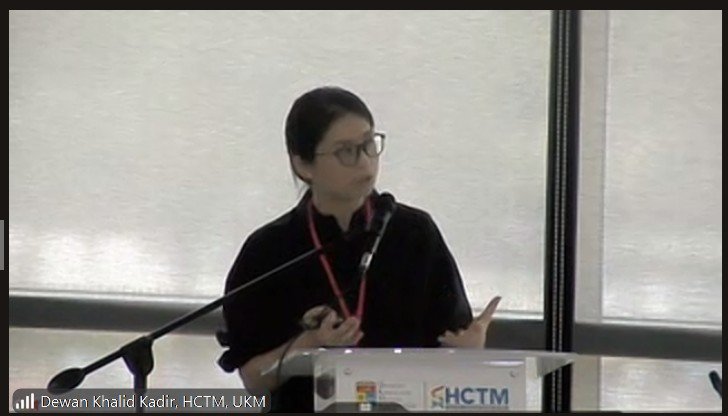
Dr. April Wu presented the results of a scoping review on the Role of Private Health Insurance
(PHI) and its impact on Universal Health Coverage (UHC). The points presented were: Definitions and Basic Concepts
1) Private health insurance is defined as health service coverage financed privately through non-income-related payments to insurance entities
2) The study covers all types of private health insurance: individual, group, mandatory, and voluntary
Reasons People Purchase Private Health Insurance
- To increase financial protection
- Gaining more choice of doctors and services
- Shifting patients from crowded public healthcare services to private services
The Role of Private Health Insurance
- A supplementary role
- Complementary role
- Substitutive role
- In Malaysia and Hong Kong, with their tax-based systems, private health insurance generally plays a supplementary or complementary role.
Research Methodology
- Literature review from 5 major databases
- Search concepts: universal health coverage and private health insurance
- From approximately 2,000 initial papers, 51 papers were finally identified for review
- The majority of studies were statistical analyses with secondary data and cross-sectional designs
The research included papers from various regions of the world, with the majority from the
Western Pacific and Europe
April Wu summarized several key findings:
- All studies reported the positive impact of private health insurance, but there were issues of equity because private health insurance is more prevalent among the wealthy, highly educated, and those living in urban areas.
- Private health insurance is positively associated with the use of outpatient services, but for inpatient services the results vary across countries.
- All studies show the protective effect of private insurance against catastrophic expenditures, but for out-of-pocket expenditures, the results vary.
Research gaps identified
1) Most studies are cross-sectional, not showing a causal relationship
2) Many studies do not distinguish between different types of private insurance
- More research is needed that uses catastrophic expenditures as an outcome measure
Dr. Wu emphasized that AKS can be an effective tool for increasing insurance coverage and protecting against catastrophic payments, but it needs to be carefully considered in terms of equity and effectiveness in the context of the existing health system.
Prof. Asnawi Abdullah, BSc.PH, MHSM, MSc.HPPF, DLSHTM, PhD Head of the Health Policy Development Agency, Ministry of Health, Indonesia
 Prof. Asnawi Duraisuddin outlined Indonesia’s strategy in developing the role of private health insurance (PHI) and private healthcare providers within the Indonesian healthcare system. Key points presented included:
Background
1) Indonesia’s health expenditure has increased by an average of 8.9% per year, faster than Indonesia’s economic growth
2) High expenditures do not automatically result in better health outcomes (e.g., the United States)
3) Most expenditures are used to treat non-communicable diseases such as heart disease, cancer, and stroke
Challenges of the Indonesian Health System
1) Only about 12% of the budget is used for primary health care services
2) Access to referral services is uneven across Indonesia (only 48 of more than 500 districts have cardiac catheterization services)
3) Limited equipment and specialist doctors in most regions of Indonesia
4) The Universal Health Coverage (UHC) score remains low despite insurance coverage reaching 98.8%
5) Out-of-pocket payments remain significant (around 29%)
Transformation of the Indonesian Health System
1) Indonesia is undergoing a major transformation with six pillars of health system transformation
2) Focus on transforming primary and secondary health services, health system resilience, equipment, vaccines, as well as financing and governance
3) Indonesia is reforming the health sector, including financing. Social health insurance is dominant (95.4% of the budget), while the role of private health insurance is small. However, there is great potential for private health insurance among high- and middle- income groups. The government is targeting an increase in private health insurance coverage from 5% to 20%.
The Role and Potential of Private Health Insurance
1) Currently, the contribution of private health insurance is relatively small (around 5%)
2) Ambitious targets to increase the role of health insurance
3) Private Health Insurance Integration Strategy
- Study models from countries with dominant social insurance (e.g., Germany, Vietnam) for incentives and options.
- Developing a “coordination model” where AKS can cover the cost difference for premium services within the social insurance system.
- Focus on regulation and the development of innovative products (roadmap until 2030).
4) Key Lessons
Countries with high out-of-pocket (OOP) costs often have higher AKS coverage (complementary/substitutive). Incentives for individuals/companies are common. The German model requires caution in Indonesia.
5) Conclusion
AKS has the potential to reduce pressure on public financing and offer choices, but must be carefully regulated to prevent negative effects. Improving access to primary care and the quality of referral services remains crucial.
Prof. Dr. Sharifa Ezat Wan Puteh (Dean of the Faculty of Public Health, Specialist in Public Health Medicine, Professor in Hospital and Health Management, Faculty of Medicine, UKM)
Prof. Dr. Sharifa Ezat Wan Puteh emphasized the evolving role of Private Health Insurance (PHI) in Malaysia, particularly in complementing the existing National Health Insurance (NHI) system. The discussion covered several key points:
1. Context and Importance of PHI
-
National Health Financing: In Malaysia, public sector financing dominates national health spending, contributing approximately 62% of the total health expenditure. Private Health Insurance (PHI) covers about 22% of the population, primarily benefiting higher-income groups (NHMS 2019).
-
Out-of-Pocket (OOP) Expenditures: Despite a strong public system, OOP expenditures remain high, accounting for around 30% of total health spending. PHI is crucial in reducing OOP costs, expanding coverage, and strengthening regulatory frameworks in alignment with the Universal Health Coverage (UHC) goals.
2. Strengths and Weaknesses of the Current System
-
Strengths:
-
An open market for health insurance, with growing Takaful premiums and a diverse range of products.
-
Faster access to healthcare in urban areas, helping to reduce wait times in the public sector.
-
Regulatory Oversight: Policies from Bank Negara Malaysia (BNM) enhance consumer protection and ensure the stability of the insurance market.
-
-
Weaknesses:
-
Limited Financial Protection: Many PHI plans do not offer comprehensive coverage, leaving individuals with high OOP expenses.
-
Medical Inflation: Rising healthcare costs, especially due to medical inflation, are increasing premiums.
-
Complex and Opaque Products: Many insurance products are difficult to understand, leading to low transparency and consumer dissatisfaction.
-
3. Opportunities and Challenges
-
Opportunities:
-
Digital Transformation: Utilization of digital tools and bancassurance can expand PHI’s reach and accessibility.
-
Innovative Products: Development of modular, affordable, and inclusive health insurance packages, particularly for chronic diseases.
-
Regulatory Reform: Introducing fair pricing and improving market transparency, with greater focus on standardizing basic packages and promoting benchmarking among private healthcare providers.
-
-
Challenges:
-
High Medical Inflation: With projections for inflation in healthcare costs to rise by 14-20%, premium increases may continue.
-
Exclusion of Vulnerable Groups: Insurance providers are often reluctant to cover elderly individuals or those with non-communicable diseases (NCDs), and might limit or refuse renewals for such policyholders.
-
Moral Hazard: There is the risk of excessive use of services by insured individuals, which could raise overall healthcare costs.
-
4. Future Strategy for Integrating PHI into the National Health System
-
Policy Vision: PHI should complement, rather than replace, public financing. Its role is to reduce OOP costs and enhance financial protection for the population.
-
National Health Financing Plan: A comprehensive plan is needed to integrate public funds, social insurance, and PHI in a coordinated manner, ensuring better resource allocation and more equitable access.
-
Health Financing Data Integration: The establishment of an integrated national health financing database is essential, as the current system is fragmented with varying electronic medical records (EMRs) across hospitals and clinics.
-
Market Reforms:
-
Standardizing basic insurance packages.
-
Promoting benchmarking of private hospitals to improve quality and reduce unnecessary costs.
-
Increasing the transparency of claim ratios to improve trust in the system.
-
-
Microinsurance: Development of micro PHI products specifically designed for low-income groups and the informal sector, supported by public-private partnerships.
-
Digital Transformation and Data Integration:
-
A national e-claims platform could streamline the claims process.
-
Use of AI to detect fraud in real time and predict health risks more accurately.
-
-
Governance and Accountability:
-
Introducing annual transparency reports and the establishment of a multi-stakeholder council to improve oversight.
-
Using indicator-based performance monitoring to ensure that goals related to UHC are met.
-
5. PHI vs. National Health Insurance (NHI) in Malaysia
-
Increased Use of PHI: Despite Malaysia’s well-established tax-based healthcare system, the use of PHI has been growing steadily year on year.
-
Rising OOP Expenditures: Approximately 20% of the population uses PHI, predominantly for outpatient services and care for the elderly. PHI has become a significant contributor to out-of-pocket spending.
-
PHI Premiums: Private health insurance premiums have risen by around 10% per year, a trend attributed to several factors:
-
Advances in medical care and technology
-
High prevalence of non-communicable diseases (NCDs)
-
Aging population
-
Reduced benefits and policy design changes.
-
-
Impact on the B40 Group: The B40 group (the lowest 40% of income earners) are significant users of healthcare services, both in the public and private sectors, but the increasing cost of premiums remains a barrier to access.
-
Regulation by Bank Negara: In response to rising premiums, Bank Negara Malaysia has implemented measures to regulate the insurance market and prevent excessive premium hikes.
-
Regional Trends: Research from East Malaysia indicates that 54% of individuals purchase PHI, with higher uptake among middle- and high-income workers, particularly in urban areas.
-
Potential Risks: The introduction of PHI may lead to longer waiting times in the public system as more people opt for private care, which could increase the complexity of cases within public hospitals.
6. Conclusion
PHI in Malaysia must evolve from being a privilege for the few to a structured component of a transparent, inclusive, and sustainable health financing system. This transition is crucial for achieving Universal Health Coverage (UHC), ensuring equitable and affordable healthcare access for all Malaysians, particularly for vulnerable and low-income groups.
Prof. Dr. Chantal Herberholz, Director of the Center for Health Economics Excellence, Faculty of Economics, Chulalongkorn University, Bangkok, Thailand

Based on Prof. Dr. Chantal Herkul-Holtz’s presentation on “The Role of Private Welfare under
Thailand’s Universal Welfare Cabinet,” the points presented included: Overview of private health insurance in Thailand:
- Thailand has achieved universal health coverage (UHC) since 2002, with a health system dominated by the public sector. The public sector has been dominant with strong infrastructure since the 1970s. The private sector remains as a complement, especially in urban areas.
- Despite having a comprehensive public healthcare system, Thailand also has a growing private healthcare sector, especially in urban areas.
- The role of private health insurance in Thailand is supplementary, providing access to private facilities with better hotel-like services.
- Private health insurance penetration in Thailand has historically been low (<9%), but has increased significantly in the last decade, reaching around 18% of total health expenditure in 2022.
- Private health insurance ownership has increased sharply in the last decade, although it has declined slightly since the COVID-19 pandemic.
- Private health insurance is primarily purchased by Thai citizens in the highest income group (top quartile) and those living in urban areas.
- Those with dual insurance (public and private) tend to visit non-designated providers and incur higher out-of-pocket expenses.
- The private health insurance market is dominated by a few large companies, with a total of 82 licensed insurance companies in 2018.
- Health insurance is usually linked to life insurance contracts or sold separately as non-life insurance.
- The Insurance Commission (OIC) was established in 2007 as an independent commission to protect consumers and address issues such as policy renewal refusals or coverage restrictions.
Challenges of private health insurance in Thailand
- Insurance penetration in Thailand is relatively low – lower than the global and regional averages. This applies not only to health insurance but to all insurance segments. There is a need to raise awareness of the importance of insurance and consumer confidence.
- High insurance premiums – private health insurance premiums are very expensive, making them affordable only to the highest income groups. If private health insurance is to play a greater role in universal health coverage, premiums must be more affordable, especially for those in the informal sector.
- Policy renewal issues – previously, insurance companies tended to refuse to renew policies when customers actually used their health insurance. This has been changed through new regulations.
- Coverage restrictions for the elderly – insurance companies will examine pre-existing conditions and refuse to provide private health insurance to the elderly. The Insurance Commission is currently developing products where this practice is no longer permitted.
- Rising medical costs – Thailand has a very high rate of medical inflation (around 14% and projected to rise to 20%). This is due to various factors including an aging population and access to private healthcare services contributing to increased costs.
Conclusion about private health insurance in Thailand
- Private health insurance in Thailand is “supplementary,” not “complementary.” This means that private health insurance gives policyholders greater choice in accessing private healthcare facilities and allows them to avoid waiting times.
- Thailand has a comprehensive benefits package with almost no copayment in its public health insurance system, so private health insurance is not “complementary.”
- The role of private health insurance may change in the future as the sustainability of Thailand’s universal health coverage is influenced by several factors, particularly medical inflation.
- Changing the current system, such as introducing copayments, is politically difficult.
- For long-term care, the market is not yet well developed, and the Office of Insurance
Commission is working with stakeholders to develop it.
Currently, private health insurance primarily serves as a supplement that provides greater choice of private service providers and allows policyholders to avoid waiting times.
Group 1: Tax-Based Financing
Questions/Comments (Prof. K.Y.):
▪ The importance of national health account analysis to track public and private funding allocations.
▪ Focus on value-based budgeting and more efficient primary care.
Question (Questioner 1):
▪ How can the political agenda be driven for health reform in Malaysia, given the need for strong leadership beyond the Minister of Health?
▪ Is the current Minister of Health not competent enough, given the influence of the public and private sectors?
Question (Questioner 1):
▪ Comments on strategic purchasing and the relationship between buyers and users. Are there mechanisms (e.g., complaint channels) to improve strategic purchasing?
Answer (Group 1/Questioner 2):
▪ (Implicitly, their presentation proposed governance reform and the establishment of a new strategic buyer commission).
▪ Leadership must be willing to take risks and seize opportunities.
Group 2: Private Health Insurance
Questions/Comments (Prof. K.Y.):
▪ Comments on the SWOT analysis (need to define the role of Private Health Insurance (PHI) in the context of UHC, distinguish between internal/external factors, prioritize actions).
▪ Highlighting problems with private insurance: unexpected delivery, adverse selection, information asymmetry, and the need for group insurance.
Group 3: National Health Insurance
Question (Questioner 3):
▪ What are the speakers’ comments on the feasibility of implementing National Health Insurance in Malaysia, especially considering Dr. Ravi’s earlier statement that Malaysia may not need social health insurance?
Answer (Prof. K.Y.):
▪ Emphasizing the “window of opportunity” (e.g., after a crisis like COVID-19) for change.
▪ The importance of a broad definition of “government” (leadership, oversight, regulation, collaboration with academics) and the need for data and collaboration between government and academics.
Answer (Prof. Siripen):
▪ The rise of private health insurance in Thailand is a consequence of the shift in public health financing from the supply side to the demand side.
▪ This has led to increased demand, long queues at public facilities, and has pushed affluent groups toward private options.
▪ Highlighting challenges for the elderly and the need for strong regulation if AKP is expanded, as well as the question of whether it should be mandatory or voluntary.
II. Session “The Future of Private Health Insurance” – Discussion & Q&A
1) Question to Dr. April
Dr. Lutfan asked about the negative findings of PHI on financial protection.
Dr. April explained that the results of PHI studies globally vary greatly due to differences in context and types of PHI.
She noted that cross-sectional studies may show correlations, but it is difficult to conclude causality.
However, PHI consistently shows a positive effect on protection against catastrophic expenditures, although this needs to be interpreted in the context of the existing public health system.
2) Question to Professor Asnawi Abdullah
A participant asked about the motivation behind the Indonesian Ministry of Health’s target to increase PHI coverage from 5% to 20%.
Prof. Asnawi explained that this aims to reduce the burden of social health insurance (JKN) financing, which is largely borne by the government, as well as to tap into the potential of high-income groups who can afford private insurance.
National single data facilitates targeting this group.
3) What are the negative effects of PHI?
-
In terms of financial protection, several countries such as China, France, Germany, and India report positive effects on out-of-pocket expenses, which means that PHI actually increases patients’ out-of-pocket expenses.
-
For inpatient care, several countries such as Australia, China, Brazil, and India report negative effects or no effect of PHI on the utilization of inpatient services.
-
Dr. April mentioned that the research results are mixed, and most studies are cross-sectional, so they cannot show a clear causal relationship.
-
From a study in Malaysia, it was mentioned that PHI has the potential to cause moral hazard behavior among PHI owners.
-
PHI can also cause a shift in attention away from public services, which can result in longer waiting times for patients in the public system, more complex cases in the public sector, and higher public costs.
-
The issue of equity was also raised, as PHI is used more by high-income, highly educated groups living in urban areas, meaning that those who really need it may not be covered.
Additional Discussion Points
Diah raised the important point that the existence of private health insurance should not necessarily be interpreted as evidence that the public insurance system is performing poorly.
She mentioned that although there are problems such as long queues and substandard performance in the public system, private insurance does not exist solely for this reason.
Dr. Puteh responded by explaining that the context of each country is very important to consider.
She explained that in Malaysia, the public health system had been running very well for many years until recent years. Issues such as long waiting times and doctors leaving the system became drivers for health reform.
Rafute also explained that private health insurance can help fill the gap for those with different preferences, not just because the public system is performing poorly.
In certain contexts, such as in very wealthy countries, they may not even need private health insurance because the government can send patients abroad for treatment at government expense.
In conclusion, private health insurance exists to complement the existing system and provide additional options for those seeking different or additional services, not merely as a response to shortcomings in the public health system.
Question for Prof. Asnawi: How to increase the role of PHI or private financing to 20%
According to Prof. Asnawi’s explanation, there are three main reasons why the Indonesian Minister of Health wants to increase the role of private health insurance from 5% to 20%:
-
To reduce the burden on the social health insurance system (BPJS). Approximately 65% of the social health insurance budget comes from the government to pay the premiums of the poor.
-
Many wealthy people still use social health insurance even though they can afford private health insurance. The government wants to provide incentives for affluent groups to switch to private health insurance.
-
Indonesia now has a single data system that makes it easier for the government to distinguish between different economic levels of society. With this data, the government can be more targeted in determining who should be encouraged to purchase private health insurance.
The source also mentioned that this idea has received a lot of protests, so the government is still looking for the best model from various countries that does not have a negative impact on universal health coverage.
Discussion by Prof. Siripen (Thailand)
He explained the health insurance situation in Thailand and why there has been an increase in the use of private health insurance.
Key Points: Providers in Thailand
-
When Thailand implemented UHC (Universal Health Coverage), the demand for healthcare services increased dramatically (two to three times), but the number of providers remained almost the same.
-
As a result, public healthcare facilities became extremely crowded and queues were very long.
-
Private providers at that time had a bed occupancy rate of less than 50% (even as low as 20–30%), but the cost of access was very high.
-
Many private providers did not participate in the social security scheme due to relatively low capitation payments.
-
This situation prompted the middle class and high-income groups to purchase private health insurance so they could access private providers without long queues.
-
Employers also began purchasing private health insurance for their employees because few private providers participated in the social security scheme.
This is what has led to the increased role of private providers and the growth of private health insurance in Thailand.
Prof. Siripen’s Recommendations to Increase PHI from 5% to 20%
-
Private health insurance must first be functional.
-
Private healthcare providers need to be well regulated, requiring good collaboration to create regulations.
-
Private healthcare providers must function very well, meaning that public service providers must be able to compete with private providers.
-
It must be decided whether private health insurance will be mandatory or voluntary.
-
The speaker suggested that if the target is to be achieved, private health insurance should be mandatory, not just an option.
-
-
It is not possible to allow people to enter and exit the insurance system at will (opt in and opt out); there needs to be a clear mechanism.
-
It is necessary to consider who will benefit from this policy (benefit incidence).
-
The speaker also highlighted the importance of regulating healthcare costs, because without proper regulation of private service providers and private health insurance, problems could arise in controlling healthcare costs.
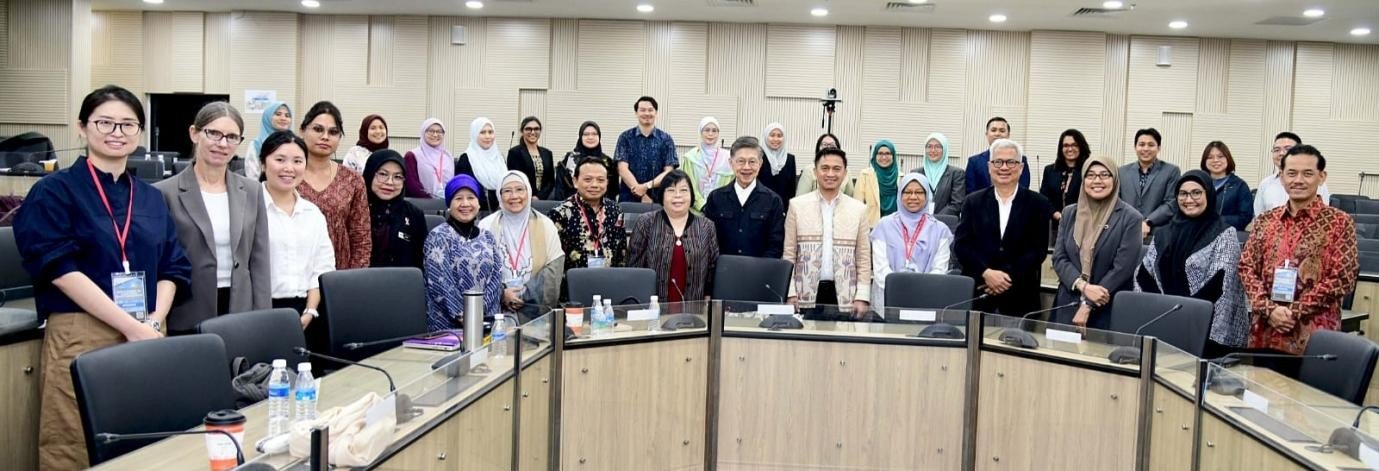
Prof. Laksono presented the following conclusions regarding private health insurance:
- Private health insurance in each country must be better understood because its context is influenced by many factors.
- In some countries, private health insurance regulations are still insufficient or not well understood.
- ANHSS will conduct more in-depth analysis and research on private health insurance in the future.
- Several countries, such as Indonesia, have already begun group discussions with various parties on this topic, as has Hong Kong.
Prof. Laksono also mentioned that this discussion session will be followed by:
- More detailed research in each network country, starting in November 2025 until March 2026.
- This research is expected to be used directly as communication material for policy makers. It is not limited to journal writing purposes. Researchers are expected to maintain ongoing communication with policy makers.
- A joint discussion in early June 2026 in Hong Kong to further discuss the role of private health insurance in supporting universal health coverage.
The event will conclude at 5:00 PM Kuala Lumpur Time.