
This session was a collaborative discussion between the Asian Development Bank (ADB) and the Asia Pacific Network for Health Systems Strengthening (ANHSS), following a meeting held in Hong Kong in early May 2025. The session featured the following speakers:
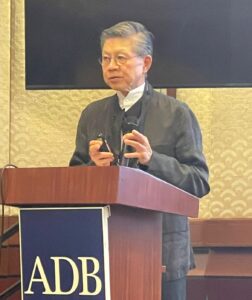 |
Prof. Eng-kiong YeohDirector, Centre for Health Systems and Policy Research, The Chinese University of Hong Kong (CUHK) Prof. Yeoh presented on “Review of the Role and Challenges of Private Health Insurance (PHI) in the Global Context.” He explained why many countries adopt PHI for various reasons, including legal mandates as seen in the Netherlands and Switzerland. He outlined three main roles of PHI globally: supplementary, complementary, or substitutive. In the Asia-Pacific region, he emphasized the need for further research to inform sound public policy and enhance the resilience of Social Health Insurance (SHI) systems. CUHK, in collaboration with ANHSS, is conducting a scoping review and joint research initiatives across countries to generate new knowledge on PHI. |
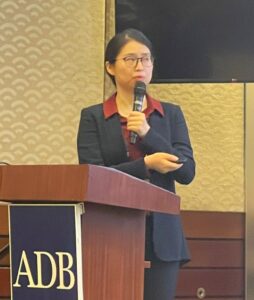 |
Dr April Yushan WUCentre for Health Systems and Policy Research, The Chinese University of Hong Kong (CUHK) April Wu presented an overview of PHI in Hong Kong. The government actively promotes PHI to expand access, improve quality, and mobilize additional health funding. As of now, healthcare expenditure accounts for 8.5% of Hong Kong’s GDP. Government spending makes up 56% of total health expenditure, while Out-of-Pocket (OOP) payments and PHI contribute 27.3% and 15.5% respectively. Currently, 42% of the population holds private insurance, with 1.34 million policies—53% of which are held by individuals under 40, and 33% by those under 30. |
|
|
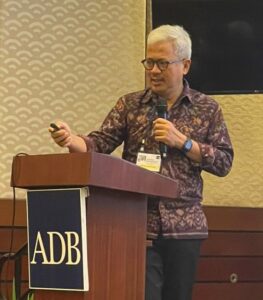
Prof. Laksono TrisnantoroDepartment of Health Policy and Management, Faculty of Medicine, Public Health and Nursing, Universitas Gadjah Mada (UGM) / Chairman of Asia-Pacific Network for Health Systems Strengthening (ANHSS) Prof. Trisnantoro described the current landscape of PHI in Indonesia. PHI is seen as a critical safety valve for the country’s SHI, which is under strain. However, the PHI sector in Indonesia remains underdeveloped. In 2023, most private insurers reported financial losses. PHI plays a minimal role in the national health system. Existing regulations are rooted in life insurance frameworks and are poorly suited to the specific risks and needs of health insurance. Additionally, infrastructure to prevent and manage issues such as fraud remains inadequate. Many insurers continue to operate at a loss, making expansion difficult without substantial reform. In summary, PHI can complement SHI if developed properly. |
 |
Prof. Siripen SupakankuntiChulalongkorn University, Thailand Prof. Supakankunti discussed the Thai experience with PHI. In Thailand, PHI primarily supports private healthcare services, especially in urban areas. Commercial private insurance has existed for nearly a century, but uptake has been slow. The Office of Insurance Commission has regulated PHI since 2007 (previously under the Department of Insurance, Ministry of Commerce). Today, PHI serves mostly as a supplementary service. Key drivers include public perception of quality and timeliness in government-funded care, with PHI offering greater choice in private hospitals. Challenges include: low PHI penetration relative to global averages, limited consumer awareness and trust, high premiums, renewal rejections, and limited coverage for the elderly. Thailand is currently working on a “balancing act” to align funding for UHC with the private insurance sector. |
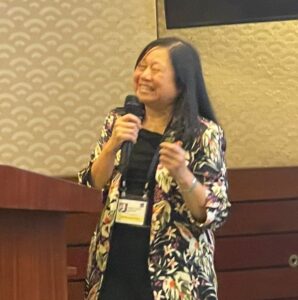 |
Prof. Maria Elena Herrera (Ret.)Asian Institute of Management, Philippines Prof. Herrera highlighted the role of PHI in the Philippines as a catalyst for strengthening the health system and advancing UHC. While PhilHealth covers 98% of the population, a variety of private schemes operate alongside it. Private insurers target two markets: (1) corporate clients and employees; (2) individual consumers. Corporate plans include HMOs, comprehensive plans with credit lines, and other mechanisms. Individual products include HMOs, critical care coverage, daily indemnities, and guaranteed coverage with waiting periods. Key issues include: PHI can fill gaps in UHC benefit packages, but its role is highly contextual and varies by disease area. |
Thalia GeorgiouManaging Partner, AsiaCare Group Ms. Georgiou contributed additional insights as a health insurance management consultant. |
Reporter:
Prof Laksono Trisnantoro
Faculty of Medicine, Public Health and Nursing, Universitas Gadjah Mada (FK-KMK UGM)/ Chairman of Asia-Pacific Network for Health Systems Strengthening (ANHSS)